

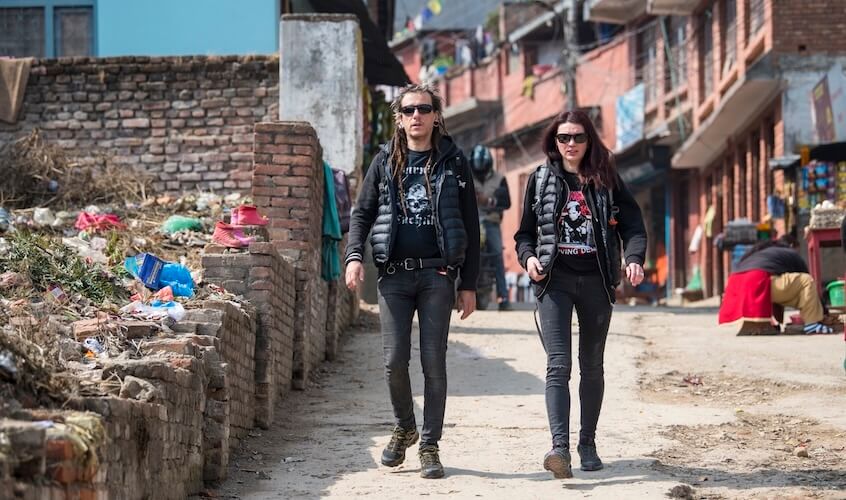
There was a time when Kathmandu was not merely an entry point to the Himalayas. During the 1960s and early 1970s, thousands of young western tourists saw this city as the ultimate destination of their journey which started thousands of miles away. They arrived in Nepal via a route which became known as the Hippie Trail through Turkey, Iran, Afghanistan, Pakistan and India.
These tourists were drawn here by many factors: spirituality, adventure, affordable living, Eastern philosophies, and escapism from the conventions of the Western world. The cannabis attraction was included in this list too. Nepal had been associated with the use of the plant for quite a long time, and its capital Kathmandu became world-known because of the legendary Freak Street and the legalisation of hashish.
Now, even after almost six decades have passed, the links between Kathmandu, cannabis, and alternative tourism have never been lost. Today, Nepal again discusses how the plant can be used for medicinal and economic benefits, while the Gandaki Province is making a great step towards the regulated cannabis growing for medical purposes.
To understand why this matters, let’s go back to the beginning of Kathmandu’s cannabis story.
The Hippie Trail to Kathmandu
The Hippie Trail is neither an official road nor a tour route. This term refers to a loose network of overland routes connecting Europe with various regions of Middle East and South Asia.
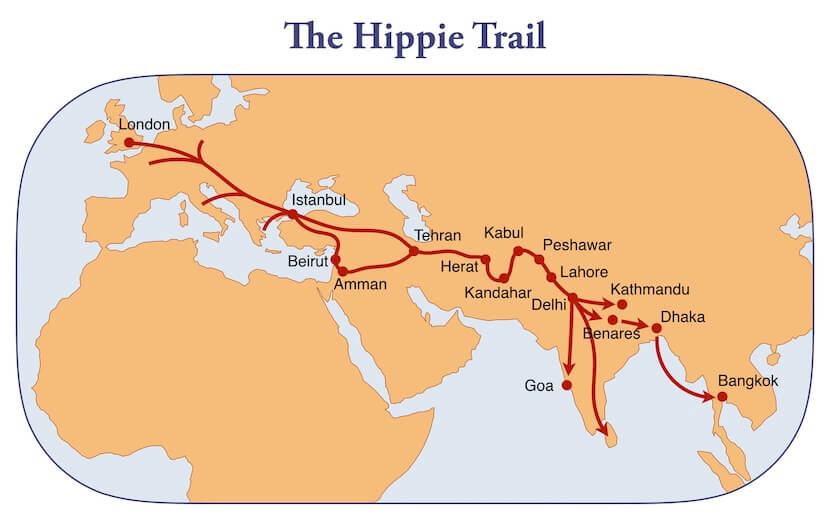
In the period from the mid-1960s to the 1970s, young people were travelling to such countries as Turkey, Iran, Afghanistan, Pakistan and India and then to Nepal. This trip entailed much more than just tourism.
The spirit of counterculture made people interested in experimenting with alternative ways of life, Eastern mysticism, meditations, music and community. With its Hindu-Buddhist religion, temples, mountains and inexpensive living conditions, Nepal seemed like a perfect destination for that generation.
Kathmandu turned out to be an eastern end-point for many of the tourists. This city was attractive due to its cannabis culture. Cannabis was cultivated and used in Nepal for centuries and only in the 1970s, it became prohibited. According to the peer-reviewed review on cannabis consumption in Nepal, Kathmandu before 1973 was described as ‘a hippie paradise’ where licensed cannabis vendors worked.
The result was an unusual combination: a Himalayan city with a deep religious and cultural heritage had become a meeting place for an international counterculture.
Freak Street: Kathmandu’s Cannabis Capital
At the centre of this scene was Jhochhen Tole, better known to Western travelers as “Freak Street.” Located close to Kathmandu Durbar Square, Freak Street became the social heart of the Hippie Trail, with guesthouses, restaurants, coffee shops, bookstores, and souvenir shops growing up due to the arrival of tourists.
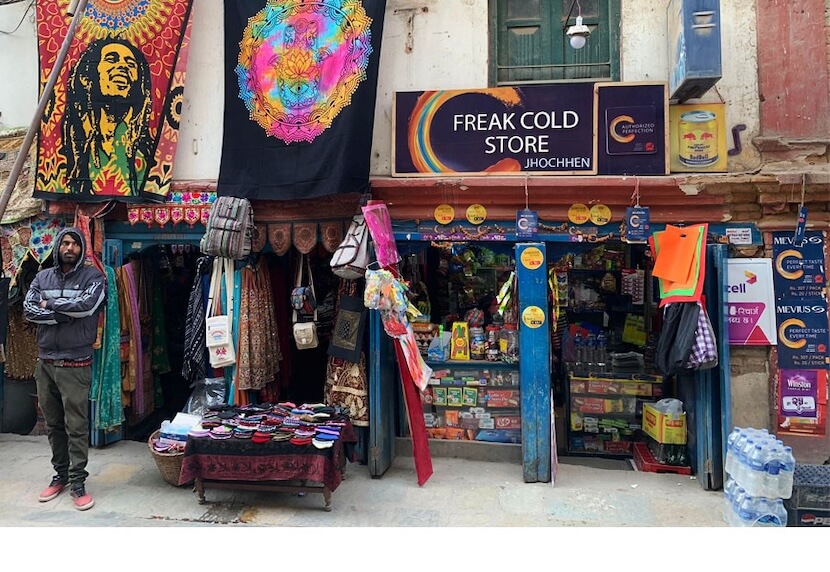
However, cannabis was the major attraction. Nepal allowed the operation of officially licensed shops, which made the country unique in terms of that era. Tourists could purchase cannabis and hashish from official vendors and did not need to resort to black market dealers like in most other nations.
Nepal had licensed cannabis cultivation and sales until the beginning of the 1970s when the decision was changed by the government of the country. Consequently, Freak Street became more than just a tourism district in Kathmandu. It became the symbol of the global counterculture era.
Nevertheless, not all the people who arrived in Kathmandu were drawn by cannabis. They might look for spiritual experience, adventures, or escape from the world. However, the legal access to hashish made the name of Kathmandu travel far across Nepal’s borders, and this reputation became one of the defining images of the Hippie Trail.
Cannabis: A Part of Nepal’s Ancient Culture
However, it is important not to portray Nepal’s cannabis history as something invented by Western hippies. And here’s why.
The use of cannabis in Nepal was common well before the hippies arrived in the country. There are reports of the cultivation and use of cannabis in Nepal long before the start of the twentieth century. It was also part of traditional practices and religious rituals.
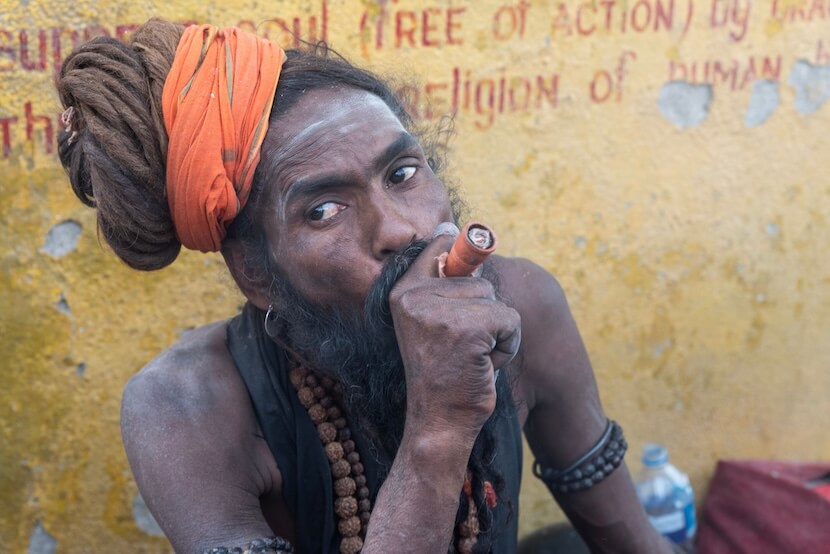
One of the well-known practices involving cannabis use is the celebration of the Shivaratri, which is a Hindu festival associated with the Lord Shiva. While cannabis preparations were associated with this celebration, the use of cannabis in Shivaratri continues to date, despite its prohibition in Nepal under national legislation for recreational purposes.
Thus, the Hippie Trail did not introduce cannabis to Nepal; instead, it brought an existing local relationship with cannabis into contact with a new international audience. For the tourists from the Western world, cannabis became a significant part of their experience in Kathmandu. However, for Nepal, the plant had a more ancient history.
Nepal Bans Cannabis – What Happened Next?
Despite all the hype and connection, the cannabis-friendly Kathmandu of the Hippie Trail era did not last. In July 1973, Nepal’s government revoked licenses for the cultivation, buying and selling of cannabis. In 1976, the Narcotic Drugs (Control) Act (1976) created a far stricter Kathmandu cannabis legality context in which cannabis became an illegal substance.
These two events were decisive turning points for the future of cannabis in Nepal’s history. Moreover, these developments took place amid an international shift in attitude towards drugs.
Governments were becoming increasingly inclined towards imposing stringent measures concerning drug control. For example, the American President Richard Nixon launched the ‘War on Drugs’ initiative. As a country with a long Hippie Trail and attracting many western visitors, Nepal was becoming increasingly entangled in this international context.
In this regard, there is indication of external pressures being applied from the US on Nepal during this time, although accounts vary in regards to the extent to which this had a direct influence on the development of Nepal’s national policies. It would be more appropriate to call Nepal’s cannabis prohibition a product of its international drug control environment than a result of foreign intervention.
What Happened to the Hippie Trail?
The effect on Kathmandu and the Hippie Trial were dramatic. The licensed hashish shops disappeared, and Freak Street gradually lost the identity that had made it famous. The international counterculture that had made Kathmandu a destination also began to fade.
However, it wasn’t just the prohibition that brought about the end of the Hippie Trail cannabis.
Political turmoil brought about changes in a number of nations along the way. The Iranian Revolution, fighting in Afghanistan and altered borders made the old overland route more and more impractical. Meanwhile, as mentioned, international measures to control drugs were growing stricter.
As a consequence, Kathmandu ceased being the natural terminus of a route that was itself going out of existence. Tourism in Kathmandu took on new areas, including Thamel as a major tourist center. The Hippie Trail had essentially become history.
What is the Status of Cannabis in Nepal Today?
According to the Narcotic Drugs (Control) Act (1976), cannabis is still regulated. Nepal’s Ministry of Home Affairs considers cannabis one of the narcotic drugs of the country, which are regulated according to the Act. Thus, Kathmandu is not a modern recreational cannabis destination as its Hippie Trail past implies.
This is crucial for modern tourists to know and implies that having an interesting cannabis past does not make cannabis legal in Kathmandu.
Moreover, since the era of the Hippie Trail, the cannabis world has experienced many transformations. There has been an expansion of medical cannabis programmes in various countries and cannabis legalisation in some regions for recreational purposes. Hence, cannabis is no longer limited to just having recreational significance – it has moved far and beyond that label.
From Hippie Destination to Potential Medical-Cannabis Market
It would be easy to dismiss the Hippie Trail as a fascinating story that dates back to the 1970s. However, the history becomes particularly relevant now, since Nepal is starting to rethink its approach to cannabis.
On August 3, 2026, Gandaki Province became the first province in Nepal to legalise cannabis for the cultivation and medicinal use of cannabis under provincial legislation. This legislation requires that the farmers get proper authorisation from the government and be monitored by the government.
It is a notable development but does not mean that cannabis in Nepal was legalised across the country. As noted by the Ministry of Home Affairs, the legal system of Nepal allows the use of narcotic substances for medicinal, scientific and research purposes if such permission was granted.
How the Hippie Trail Story Intersects With Today’s Cannabis Debate
Modern-day conversations surrounding cannabis are completely different from the one surrounding Freak Street back in the 1970s. It’s established that Nepal has an environment where cannabis can grow naturally, along with many generations of people who have the necessary traditional knowledge about the plant.
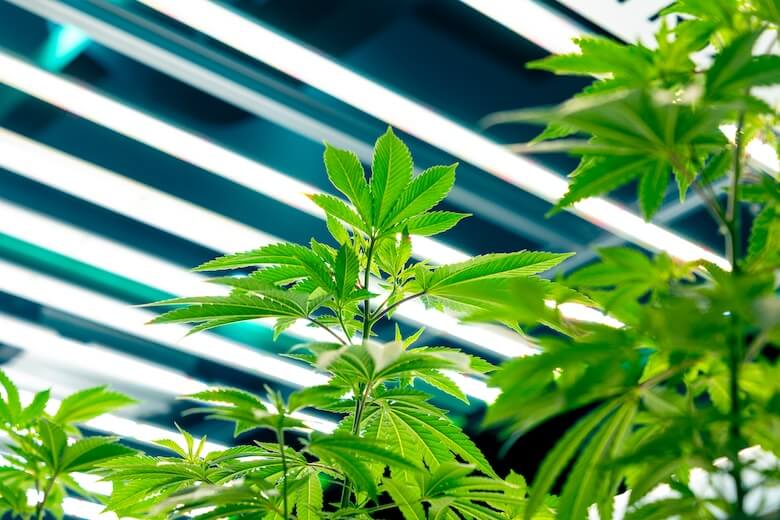
While the old cannabis industry was closely related to tourism and informal cannabis consumption, the current discussion of policies have begun to include issues such as regulation, licensing, quality control, medical research, agriculture and legal supervision.
This difference may prove vital in case Nepal decides to expand its cannabis reforms. Instead of trying to rebuild Freak Street into the same kind of cannabis tourism hot spot, Nepal can try to establish a regulated cannabis industry.
Conclusion: The Hippie Trail’s Lasting Legacy
Walking around Freak Street now, it is hard to picture the number of people who used to make this narrow Kathmandu neighbourhood so well-known outside the borders of Nepal.
The hashish vendors have packed up and left. The consumption of cannabis is no longer legal in Nepal. The broader Hippie Trail, which depended on specific geopolitical circumstances making overland trips between Europe and Kathmandu feasible, is also gone.
But the story is far from forgotten.
The Hippie Trail contributed to establishing Kathmandu’s reputation as an icon of alternative tourism. Cannabis played a crucial role in this process, but it was only one of many things making the cultural experience of Nepal truly unique.
Today, Nepal is once again asking what role cannabis should play in the country – and the answer has very little resemblance to the cannabis culture of Freak Street. The emphasis is now more on the medical usage, cultivation and economic benefits of cannabis, instead of the recreational tourism aspect. The move by Gandaki Province signifies the shift from nostalgia to experimentation in terms of cannabis policies.
Although the Hippie Trail might have come to an end decades back, the legacy of the trail still continues to form part of the heritage of Kathmandu. As Nepal considers revisiting its ties with the plant that was freely available in its capital years ago, it becomes evident from the history of Freak Street and the Hippie Trail that the story of cannabis in Nepal has not merely been one of prohibition and legalisation alone.


Leave a Comment