

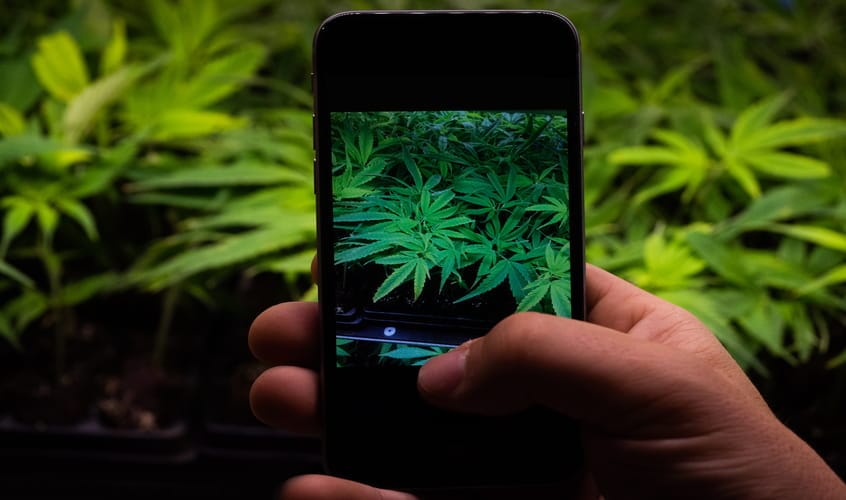
Smoke weed. Post video. Go viral. Receive free weed. Retire early.
That’s roughly how becoming a weed influencer can look from the other side of the screen.
Anyone with a phone can start posting. You don’t need a degree, a studio, or a formal invitation from the cannabis industry. You just need an internet connection and enough confidence to start posting. But that low barrier to entry also means plenty of people are competing for the same views, followers, and partnerships.
Behind every effortless-looking video is a busy creator planning content, filming multiple takes, editing clips, answering comments, following trends, and trying not to get flagged for showing the very thing their account is about.
Being a cannafluencer can lead to real opportunities, but it isn’t simply a matter of posting weed and getting paid. It’s a content business operating inside one of the internet’s most restricted industries, and building a sustainable career takes much more than going viral once.
In this article, we’re breaking down how cannabis influencers make money, what it takes to build an audience, and whether posting about weed can actually become a sustainable career.
How Cannafluencers Actually Make Money
Free weed is a nice perk, but it does not pay the electric bill. For cannabis influencing to become more than an expensive hobby with excellent samples, creators need a way to turn their audience and content skills into actual income.
Exactly how much they can earn varies wildly. Collabstr, a global creator marketplace, currently puts the average asking price for a cannabis sponsorship at around $175 USD. However, rates can range from free products to thousands of dollars depending on the creator’s location, audience, engagement, platform, deliverables, and whether the brand wants to reuse their content.
More importantly, what a creator charges for one post is not necessarily what they reliably earn each month. There is no standard cannafluencer salary, or even one dependable way to make money. Most successful creators earn from several different sources, such as:
1. Brand Deals and Paid Partnerships
Brand deals are one of the most direct ways for a cannafluencer to get paid. A company may hire a creator to make a sponsored post, produce a reel, feature a product in a video, or promote a campaign across several platforms.
These partnerships can range from a single product placement to an ongoing ambassador role. How much a creator earns depends on factors like audience size, engagement, content quality, campaign requirements, and whether the brand wants permission to reuse the content in its own marketing.
Cannabis partnerships also come with extra complications. Creators and brands have to consider advertising regulations, audience age, platform policies, and the language used to describe a product. A casual health claim or overly direct sales pitch can create compliance problems or get the post removed.
Paid partnerships are growing, but they are also becoming more selective. Having followers may get a brand’s attention. Showing that you can create reliable, compliant content that people actually respond to is what makes a creator worth hiring again.
2. Affiliate Links and Discount Codes
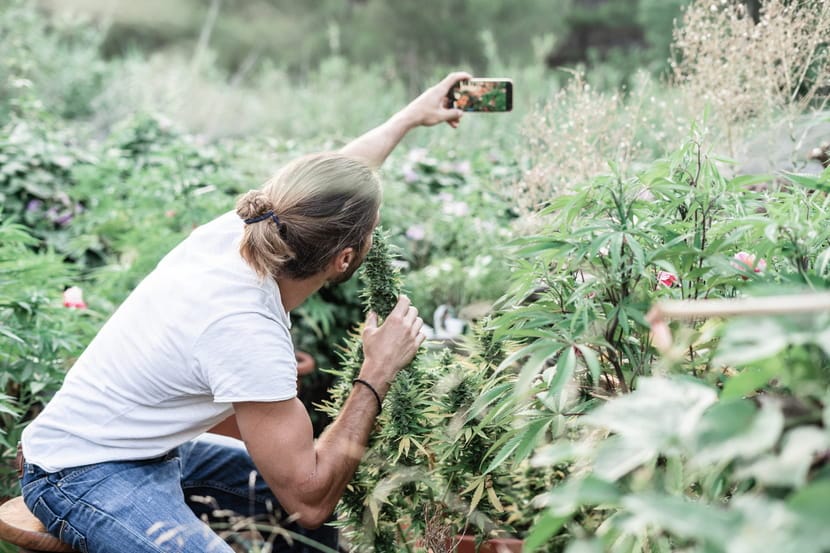
Affiliate marketing allows creators to earn a commission when someone purchases through their link or uses their discount code. Instead of receiving a flat rate for a post, the creator gets paid based on the sales they generate.
This model can create ongoing income from a single piece of content, but only when the audience trusts the person making the recommendation. People are unlikely to buy through a weed influencer who declares every product the best thing they have ever tried, especially when something different becomes their new favourite the following week.
Creators with smaller but highly engaged audiences can sometimes outperform much larger accounts because their recommendations feel personal and credible. In cannabis, that trust carries extra weight. People want honest information about the products they consume.
Affiliate income can also be unpredictable. A popular review may generate commissions for weeks, while another post earns almost nothing.
3. Platform Monetisation
In the wider creator economy, platforms may pay creators through advertising revenue, subscriptions, bonus programs, or creator funds. Cannabis content does not always receive the same opportunities, and even getting through the front door is becoming harder.
YouTube recently announced that, beginning in February 2027, new creators seeking ad and Premium revenue sharing will need either 8,000 qualified watch hours within one year or 20 million qualified Shorts views within 90 days. Shorts creators will also need to maintain 10 million qualified views every 90 days to continue receiving Shorts ad and subscription revenue.
Reaching those numbers would be challenging in any niche. For weed influencers, whose content may be age-restricted, demonetised, or otherwise limited, the climb can be even steeper.
Monetisation on Instagram and TikTok can be similarly inconsistent, with cannabis accounts sometimes excluded from creator programs or penalised for content that would be legal in the creator’s location. Even creators who qualify may lose access after a policy change, content review, or account restriction.
For most cannafluencers, payments from the platforms themselves are best treated as supplemental income, and not the foundation of the business.
4. Diversified Income Streams
The creators making consistent money rarely depend on one brand, platform, or paycheck. Instead, they use their visibility and content skills to develop several sources of income.
That might include:
- Paid memberships or subscriptions
- Merchandise
- Event appearances and hosting
- Social media consulting
- User-generated content for cannabis brands
- Photography or video production
- Educational products or workshops
User-generated content, or UGC, can be particularly useful for creators who are skilled behind the camera but do not have a massive following. In this arrangement, a brand pays for the content itself rather than access to the creator’s audience. The creator produces photos or videos that the company can publish through its own channels or use in larger campaigns.
Some cannabis influencers also build paid communities through Patreon or other subscription platforms, where followers may receive exclusive videos, longer reviews, behind-the-scenes content, or direct access to the creator. Others turn their industry knowledge into consulting work, helping brands understand cannabis audiences and create content that feels natural online.
Diversification provides some protection when a brand deal ends, an affiliate program changes, or a platform suddenly limits an account’s reach. It also shifts the creator’s value beyond follower count. A successful cannafluencer is not just someone with an audience; they may also be a marketer, producer, host, educator, or business owner with several ways to get paid.
The Platform Problem
Cannabis may be legal in a growing number of places, but online, it still lives in a grey area. A cannafluencer can follow the laws where they live and still violate the rules of the platform where they post.
Meta, for example, prohibits content that attempts to buy, sell, trade, donate, or gift marijuana and products containing THC. Its advertising policies also prohibit ads promoting the sale of THC products. On YouTube, a video promoting a cannabis dispensary may be age-restricted, while drug reviews and advice about recreational cannabis use may receive limited or no ad revenue.
For creators, that can mean:
- Posts removed without warning
- Videos age-restricted or demonetised
- Accounts suspended or deleted
- Content excluded from recommendations
- Hashtags hidden from search
- Reach dropping with little explanation
Creators often refer to that last experience as shadowbanning: the account technically remains active, but far fewer people can find or see its content. Because platforms rarely confirm when or why they have quietly limited reach, it can be difficult to distinguish a penalty from an ordinary algorithm change. Either way, the result is the same: fewer views, slower growth, and less value to potential brand partners.
Learning to Speak in Code
To stay visible, cannabis creators have developed a language designed to say “weed” without saying weed. They may talk about “gardening,” use leaf emojis, censor product names, avoid showing consumption, or direct followers to a link without explicitly explaining what it sells.
These workarounds are not guaranteed protection. A post can be reviewed by automated moderation systems, flagged by another person, or interpreted differently by the next reviewer.
The rules also vary by platform, region, and content type. Educational discussion may be treated differently from direct promotion. Organic content may be allowed where a paid advertisement is not. A video may remain online but be placed behind an age restriction that dramatically reduces who can see it. Even creators who study the policies closely are working with rules that can change, and enforcement that is not always consistent.
That’s why major cannabis partnerships rarely look like a celebrity taking bong rips and adding a “buy now” link. Creators and brands often rely on lifestyle imagery, educational content, indirect language, or user-generated content posted through the brand’s own channels. The goal is not only to create something engaging. It is to create something that survives moderation.
For a weed influencer, platform knowledge is part of the job. Every caption, visual, hashtag, link, and claim requires judgment. Push too far, and the content may disappear. Play it too safe, and the post may fail to say anything meaningful at all.
Ultimately, creators are building audiences on platforms they do not control. An account can take years to grow and seconds to restrict, making email lists, websites, and a presence across multiple platforms matter more than smart marketing. They are insurance against having an entire career erased with one notification.
What It Actually Takes to Grow
Avoiding account deletion is only half the battle. A cannabis influencer still has to make content people want to watch, and do it often enough that they are not forgotten between posts.
That means filming, editing, writing captions, responding to comments, pitching ideas, checking analytics, and planning what comes next. A 30-second video may take hours to produce, especially when the creator is working alone as the writer, camera operator, on-screen talent, editor, and social media manager.
Growth also requires understanding how different platforms work. A quick joke or trending sound may perform well on TikTok or Instagram Reels, while YouTube gives creators more room for reviews, interviews, tutorials, and educational content. Simply uploading the same video everywhere is easier, but adapting the hook, pacing, format, and caption for each platform usually gives it a better chance.
Creators also have to keep up with what audiences are watching. Trending sounds, editing styles, video lengths, and popular formats change constantly. The goal is not to copy every trend that crosses the feed, but to recognise which ones can be adapted without making the creator’s content feel forced or indistinguishable from everyone else’s.

Going Viral Isn’t a Strategy
Some creators get lucky with an early viral post. Most do not.
For the average weed influencer, growth is slow and intentional. It comes from testing different formats, learning what the audience responds to, and showing up consistently even when a post receives 400 views after consuming an entire afternoon.
More people are creating cannabis content than ever, so effort alone is not enough. Two people can spend the same number of hours on a video and receive completely different results based on timing, subject matter, presentation, and whatever mood the algorithm happens to be in that day.
The work also does not stop when the camera turns off. Once creators begin viewing everyday life through the lens of potential content, a dispensary visit becomes a vlog, a smoke session becomes a review, and a passing thought becomes a note for the next reel.
Building an audience does not require posting every second of your life. It does require a repeatable process, a clear point of view, and the patience to keep improving before the internet starts paying attention.
What Makes a Cannafluencer Stand Out?
Cannabis is the subject, not the entire personality.
People may discover a cannafluencer because they searched for a product review or stopped to watch an impressive dab. They follow because they like the person delivering it. Humour, curiosity, strong opinions, storytelling, visual style, and the ability to make an ordinary experience entertaining are often what separate memorable creators from everyone else holding a nug up to the camera.
That personality still needs direction. “I post about weed” is broad. “I make approachable edible reviews for people with low tolerances” immediately tells both followers and potential partners why the account exists. The strongest niches combine a clear subject with a perspective that could only come from that particular creator.
The idea does not always need to be groundbreaking, either. Nug photography and standard product reviews have been done approximately one billion times. A “get ready with me to take edibles at the aquarium,” however, adds a story, a setting, and a little absurdity. The cannabis is still central, but the creator has given people something more interesting to watch than another rotating jar.
A Good Idea Still Needs Good Execution
Personality may be half the battle, but even the most charming person online is only as interesting as the content they create.
A great concept can fall flat when the opening takes too long, the pacing drags, the audio is rough, or the video never delivers on its setup. Strong creators learn how to build a hook, frame a shot, gather interesting B-roll, transition between ideas, and edit out anything that slows the content down.
Creators also have to keep learning as formats, tools, and audience expectations evolve. Having a natural knack for storytelling or being comfortable on camera certainly helps, but much of the craft is developed through practice.
Niche, authenticity, consistency, and compliance with the platform’s policies all matter. They create the foundation for a successful account. What makes a cannabis influencer stand out is the part that cannot be copied as easily: a distinct personality paired with the skill to turn that personality into genuinely good content.
The Burnout Factor
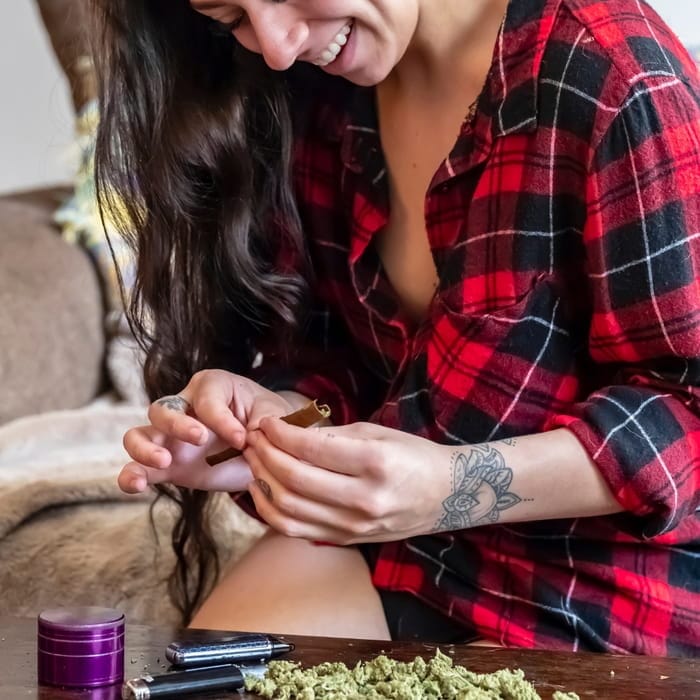
Cannabis influencing may begin as a side hustle, but as the audience grows, so does the workload. More followers can mean more opportunities, but it also means more posts to plan, partnerships to manage, comments to answer, and pressure to remain visible.
Creators are constantly looking for the next idea while competing with thousands of other people trying to capture the same audience. Because income is inconsistent, it can be difficult to turn down work when it appears, even when the creator is already spread thin. A few exciting brand packages can quickly become a shelf full of products waiting to be filmed.
Cannabis adds another layer to the pressure. Every concept has to be weighed against platform policies, advertising regulations, and the possibility that hours of work could be restricted or removed. Over time, always being “on” can turn a fun creative outlet into a job that follows the creator everywhere.
Burnout is common in content creation, and the extra complications surrounding cannabis do not make it easier. It just means that quitting your day job after one viral bong video is probably not the move. Starting small gives creators time to develop their skills, test whether they enjoy the work behind the content, and build income without expecting a new account to immediately support them. For the right person, it can become something sustainable, but only if they build it that way.
So… Is Being a Cannafluencer Actually Sustainable?
It can be, but sustainability looks less like constant viral success and more like a well-run small business.
Creators with lasting careers rarely rely on one platform, sponsor, or income stream. They may combine brand partnerships with affiliate income, UGC, events, subscriptions, consulting, or other services that remain valuable when views fluctuate.
They also build ways to reach their audience outside the feed. An email list, website, paid community, or presence across several platforms provides some protection if an account is restricted or deleted.
Cannabis influencing has a better chance of becoming sustainable when a creator:
- Develops a recognisable niche
- Builds several sources of income
- Understands platform policies and cannabis regulations
- Tracks contracts, expenses, invoices, and campaign results
- Creates boundaries around what becomes content
- Charges for the full work behind each deliverable
That last point matters. A sponsored reel may be 30 seconds long, but its price must account for planning, filming, editing, revisions, posting, exclusivity, and content usage rights. If a creator is consistently producing professional work in exchange for products, the arrangement may be valuable to brands without being sustainable for the creator.
Most weed influencers are better off starting alongside another source of income. That gives the account time to grow and makes it easier to reject bad partnerships.
Full-time income is possible, but it is not the only worthwhile outcome. A cannabis influencer may build a profitable side hustle, create a pathway into other industry work, or simply earn money from content they genuinely enjoy making. Sustainability is not necessarily becoming internet-famous. It is building something that continues to feel worthwhile after the novelty wears off.

Conclusion: Clout vs Reality
Becoming a cannafluencer is easy. Becoming a successful one is not.
Anyone can point a camera at a joint and post the result. Building an audience (and turning that audience into income) requires personality, creativity, technical skill, strategy, and the patience to keep working when the views do not immediately follow.
The rise of the cannafluencer is not really about who can smoke the biggest joint or collect the most free products. It is about who can turn their perspective into content people trust, then build enough structure around that content to make the work sustainable.
There may still be free eighths along the way. Just don’t mistake them for a retirement plan.



Leave a Comment