

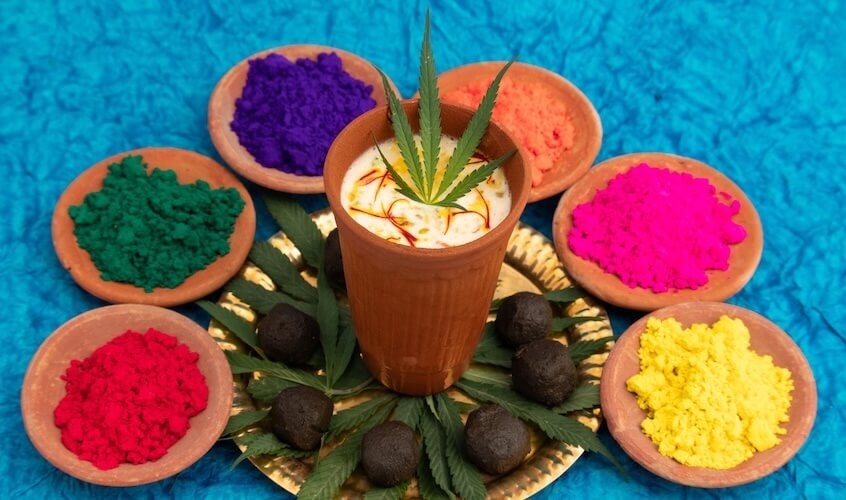
At first glance, it seems that India’s policies regarding the use of cannabis are somewhat contradictory. On the one hand, consumption of bhang is legal, as evidenced by the existence of government-operated shops selling this substance in India. However, at the same time, possession of marijuana results in serious legal actions and even prison time for offenders.
As a result, one could ask the following question: if both substances are obtained from the cannabis plant, why is bhang legal, and marijuana is not?
To understand the reason for such an approach, it is important to take into account the complexity of the issue. It should be noted that there is more than meets the eye when one talks about cannabis laws of India. What might look like inconsistency is, in reality, a careful definition of various types of cannabis by means of law, culture, and tradition.
Understanding Cannabis: Bhang vs Marijuana
Understanding the distinction between bhang and marijuana requires knowledge about what the two really are. They both come from cannabis plants, but from different parts and are prepared in very distinctive ways.
Leaves and flowering tops of cannabis look alike botanically, but this difference has huge legal consequences in India as far as its classification under Indian legislation is concerned.
Bhang
- Bhang is made from the leaves and seeds of cannabis. This drug is usually taken in drinkable and edible forms like bhang thandai or bhang lassi.
- Bhang has a long history of usage in India where it was introduced centuries ago and became part of the country’s culture and rituals involving Lord Shiva.
- The psychoactive properties of bhang are less intensive because the leaves contain less THC than other parts of the cannabis plant.
Marijuana
- Marijuana consists of flowering tops called ganja and of resin called charas, which comes from the cannabis plant.
- Ganja and charas contain much higher amounts of tetrahydrocannabinol (THC), the primary psychoactive compound responsible for the ‘high’ associated with cannabis use.
- As a result, marijuana is considered more potent and carries a different legal status than bhang.
The Science Behind the Difference
Understanding the scientific composition of cannabis plants can provide clarity about the distinction between bhang and marijuana in the law. Cannabis plants have over one hundred compounds called cannabinoids. However, there are two that stand out: tetrahydrocannabinol (THC) and cannabidiol (CBD).
The psychoactive component of cannabis is THC. It is found in the flowering tops and resin of the plant, which are categorised as illicit substances under Indian laws. Cannabidiol (CBD) does not have any psychoactivity and is increasingly gaining attention due to its medicinal properties.
The leaves used in the production of bhang contain less quantities of THC compared to those found in marijuana. The consequence of this is that the effects of bhang are milder and even slower to be felt if taken orally compared to the inhalation of marijuana.
This is a very important consideration from a legal point of view because many laws tend to try and regulate substances according to their risk of abuse. Consequently, by targeting THC the law can easily regulate the part of the cannabis plant that causes its addictive effects.
Historical Context Before 1985 (Colonial and Pre-Colonial Era)
In order to gain a proper understanding of the existing legal system, we must understand the status of cannabis in times before the NDPS Act became applicable.
Cannabis had been used in ancient India by many groups, without being subject to any strict regulations. Different forms of cannabis were popular, such as the above-mentioned bhang, ganja, and charas.
In times of British occupation of India, worries related to the usage of cannabis led to the creation of the Indian Hemp Drugs Commission in 1893. Interestingly enough, the results of thorough research conducted by the commission showed that moderate cannabis use was not particularly harmful and that outright prohibition would be impractical and culturally insensitive.
Consequently, colonial rule decided to regulate and not prohibit the use of cannabis through taxation and licenses for decades. This is what made cannabis socially acceptable in India.
However, prohibition came about in the latter part of the twentieth century, mostly because of external pressure and not internal demand. Such historical consistency is what allows some strains of cannabis such as bhang to maintain social relevance despite being prohibited.
The Legal Backbone: The NDPS Act, 1985
The existing legal framework regulating the use of cannabis in India is largely guided by the Narcotic Drugs and Psychotropic Substances Act, which was passed in 1985. The enactment of this law represented a substantial change in India’s strategy for dealing with drugs.
What makes the NDPS Act particularly important in this discussion is how it defines cannabis. According to this definition, cannabis consists of charas that is obtained from the resin of the plant and ganja that includes the flowering or fruiting tops of the cannabis plant. Cannabis also includes any mixture or preparation made from these items.
But the most important thing about cannabis in the NDPS Act is that it excludes leaves and seeds of cannabis that are not used in conjunction with the flowering or fruiting tops of the plant. This reflects a conscious decision to differentiate between various parts of the cannabis plant based on their psychoactive properties and cultural relevance. Thus, bhang, which consists of leaves only, does not come under the prohibited category.
Nevertheless, mounting pressure from the international community, especially through drug control conventions such as the 1961 Single Convention on Narcotic Drugs, compelled India to introduce stricter measures to control drug abuse and trafficking.
Penalties Under NDPS Act
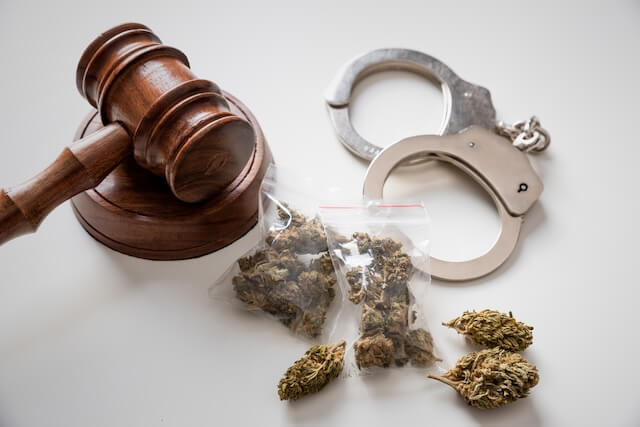
It would be useful to consider how the penalties work under the NDPS Act to understand the seriousness with which marijuana cases are taken. Penalties vary according to the amount of the substance involved in each case.
- Where small amounts are involved, imprisonment for one year or a fine, or both may follow.
- Imprisonment for a period of up to ten years may follow if the amount is between that of small and commercial quantities.
- If commercial quantities of the drug are involved, then a jail term of ten to twenty years, in addition to hefty fines, may be imposed.
This framework reflects an attempt to differentiate between casual users and large-scale traffickers. However, in practice, even minor possession can lead to prolonged legal proceedings, highlighting the strict nature of India’s drug enforcement system.
Why Bhang Is Legal (or Semi-Legal)
As discussed, the legal status of bhang in India is mainly determined by its non-inclusion in the definition of cannabis under the NDPS Act. Being extracted from the leaves and not from the flowering tops or resin of the plant, it does not constitute a narcotic substance according to the law. Hence, it cannot be considered illegal at the national level and is not restricted in use the way marijuana is. Nevertheless, there are still regulations.
Cultural and Religious Significance
Contrary to narcotics law, the cultivation and selling of bhang is usually subject to the laws of individual states, which have the power to regulate the sale of this product through excise laws. In states such as Uttar Pradesh and Rajasthan, the government controls the availability of bhang through official stores, especially during festivals.
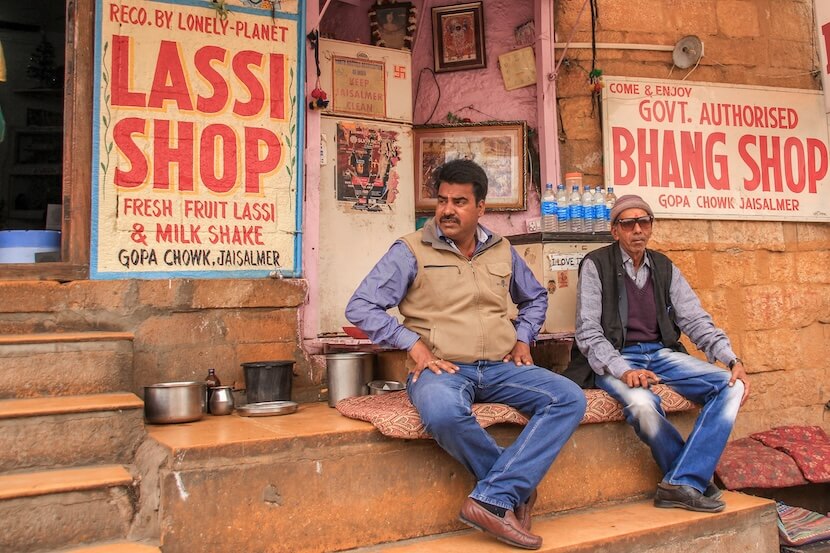
Bhang has been used for spiritual purposes for centuries in India, especially in rituals involving Lord Shiva. The consumption of bhang on occasions like Holi and Maha Shivaratri is not only condoned but is even considered a mark of celebration. Thus, it would be very hard to equate bhang with other narcotic substances without inviting social tensions.
Striking a Balance between Tradition and Society
From a policy perspective, allowing bhang while prohibiting more potent forms of cannabis can be seen as a pragmatic compromise. It acknowledges traditional practices while still maintaining control over substances considered more harmful. This approach reflects a broader tendency in Indian policy-making to balance modern regulatory frameworks with historical and cultural realities.
Why Marijuana Remains Illegal in India
Whereas bhang is outside the scope of the NDPS Act, the case of marijuana is completely different. This is because, in addition to the flowering tops of the cannabis plant, marijuana also contains the resin and thus is categorised as a narcotic substance, with dire legal consequences attached to its possession, sale, and use.
Punishment and Fines
Penalties for the offenses of possession, sale, and use of marijuana in India are severe and depend on the amount held in possession by the offenders. For example, the offender may face arrest even for possessing minimal amounts of marijuana, while huge amounts would warrant years in prison, together with hefty fines.
Conventional Approach
Other factors that affect the illegal nature of marijuana include India’s commitment to international conventions on drugs. As the world’s perception of cannabis has evolved recently, many countries have considered legalisation or decriminalisation of the substance. However, India still sticks to its previous pledges, which promote prohibition of cannabis.
Potential Risks to Health
Health risks are another factor that determines the illegality of cannabis use in the country. The risks associated with addiction, negative impact on psychological well-being, and possible abuse of the substance are discussed in public policy debates and continue to shape the government’s approach to cannabis regulation in India.
The Role of States: A Fragmented Reality
India’s federal system adds yet another complication to cannabis legislation. Although the NDPS Act outlines a set of cannabis legislation for the whole country, each state has considerable authority in implementing this act. As a consequence, different laws related to cannabis may be enacted differently across the states of India.
Regarding the use and sale of bhang, it is up to the state government how to regulate this issue. Some states license bhang shops and include them in their excise laws, whereas others prefer imposing tougher measures, including prohibition of its consumption. This creates a patchwork of regulations that can be confusing for both residents and visitors.
Furthermore, there are also significant differences in how this legislation is enforced across the country. The reason for that is differences in the policies adopted by each state, including those related to policing. As a result, the lived experience of cannabis regulation in India can differ significantly depending on location.
Comparison with Global Cannabis Laws
India’s approach to cannabis becomes intriguing when viewed in a global context. For example, countries like Canada and Uruguay allow the use of cannabis legally, while several states in America have a similar system. For instance, Portugal decriminalised drug possession and now concentrates on rehabilitation programs.
Asian countries, on the other hand, still adhere to harsher policies regarding drugs and cannabis use. In that sense, India finds itself somewhere in between, having no intention to legalise cannabis usage, but also not enforcing a general ban on the substance. While it may be influenced by future global developments, a radical change seems unlikely in the near future.
Cultural vs Legal Reality
Another interesting dilemma in India’s marijuana landscape is the inconsistency between its legislation and cultural perceptions. Although legislation clearly outlines that bhang and marijuana are different substances, cultural perceptions do not follow such an approach.
On the one hand, bhang is considered part of the culture and religion, as its use is permissible at some festivals. Its consumption is often normalised and even encouraged in certain settings. On the other hand, marijuana is usually perceived as a prohibited substance because of the risks associated with its use.
This discrepancy shows that cultural myths play a considerable role in the perception of substances. Additionally, this observation reveals the significant role of circumstances in defining how laws operate and highlights the temporary shifts in social norms, even though the underlying legal framework remains unchanged.
Medical and Industrial Exceptions
Even though India’s policies regarding recreational marijuana are very restrictive, in recent years, the nation began to consider exceptions for the plant in certain areas like its medical use and industrial application. This reflects a growing recognition of the plant’s potential beyond its psychoactive properties.
- The use of cannabis-based medication, especially CBD, is becoming more acceptable despite the fact that rules regarding their authorisation and regulation still need work. Nonetheless, they indicate a gradual change in India’s attitude towards cannabis due to its health benefits.
- Another exception to India’s cannabis policies refers to industrial hemp – marijuana that does not contain psychoactive components. At present, several states have started conducting experiments in which industrial hemp is applied in different industries like manufacturing textiles and foods.
Overall, these exceptions suggest that India’s cannabis policy is cautiously evolving. While recreational use remains restricted, there is increasing openness to exploring regulated and purpose-specific applications.
Debates and Calls for Reform
Discussions on the reform of cannabis-related policies have become increasingly prevalent in India in recent times. However, actual legislation based on such discussions is still nowhere near fruition.
The positive thing is that the public’s perception of cannabis is changing, albeit gradually, especially for those living in cities. Global awareness, science-backed studies on marijuana, and the use of wellness products made with CBD have played a part in creating an increasingly nuanced view of cannabis. Yet, this trend is not universal and applies only to certain demographics.
Simultaneously, there is considerable opposition to reform. The fear of abuse, regulatory shortcomings, and possible unintended consequences all play a role in determining the conservative attitude of the policymakers. Contrary to those nations that legalised marijuana within a short period, India would probably pursue an incremental strategy that would involve expanding the use of marijuana in a controlled manner.
Classification of Cannabis Laws and Regulations
Perhaps the most interesting policy debate that has developed recently involves the classification of cannabis laws and regulations. Lawyers have emphasized that the separation of the two types of cannabis based on the distinction between the leaves and flowering tops of the plant might not be entirely reflective of reality in certain situations. In particular, it may prove to be difficult for law enforcement officers to establish what part of the cannabis plant they are dealing with when trying to apply the law.
Decriminalisation of Possession
Yet another new dimension that has entered into this debate is decriminalisation of possession by individuals. Proponents of reforming this law have pointed out the fact that current laws impose criminal sanctions on people, especially the younger ones and those who have just begun to use drugs, thereby causing serious repercussions on their future lives both socially and professionally. Therefore, a public health approach should be adopted and users should be directed towards treatment rather than criminal proceedings.
Encouraging Regulated Use
The other new aspect emerging into this debate is one of economic opportunity, although in a narrower context. This is not related to the possibility of legalisation of recreational marijuana, but instead focuses on the idea of promoting cannabis-derived products through the regulated production of these products. The fact that licensed bhang shops have been successful in certain states serves as evidence of the fact that regulated markets can succeed without any abuse.
Supporting Law Enforcement
Another equally critical but less talked about topic is the burden it places on the law enforcement process. Given limited resources, pursuing possession of marijuana cases may distract law enforcement officers from investigating more critical cases, such as drug trafficking. Some researchers propose that reforming laws pertaining to marijuana possession will make the criminal justice process more efficient.
One thing seems to be certain – the discourse is slowly shifting. Instead of a black-and-white discussion around whether the drug should be legal or not, India is progressing toward more nuanced debates about whether a strict separation between marijuana and bhang, which has always been justified, is necessary today.
Conclusion: A Confusing Policy That Reflects Compromise
India’s approach to cannabis regulation may seem inconsistent at first, but it is better understood as a carefully constructed compromise. By distinguishing between different parts of the cannabis plant, the law creates space for cultural practices while maintaining strict controls over substances considered more potent and potentially harmful.
The legal status of bhang is not an accident or a loophole. It is the result of deliberate legal definitions combined with deep-rooted cultural acceptance. Marijuana, on the other hand, falls outside this protective framework, and is therefore subject to prohibition.
This dual system reflects a broader balancing act between tradition and modernity, flexibility and control. Whether this balance will shift in the coming years remains uncertain, but for now, it continues to define one of the most unique and complex cannabis policy landscapes in the world.






Leave a Comment