

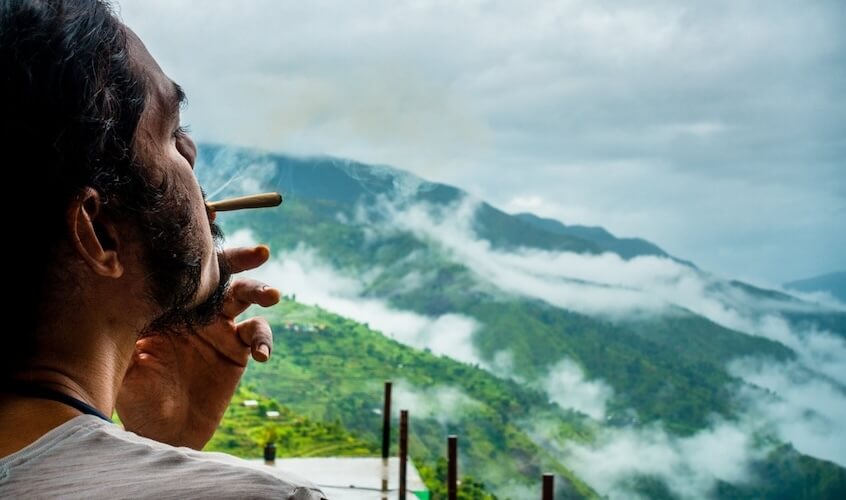
Indian spiritual tourism is characterised by intersections of religion, mythology, nature, meditations, pilgrimage, and centuries-long traditions. There is no place better illustrating this interconnection than the destination of Varanasi in Uttar Pradesh and the destination of Himachal Pradesh in the Himalayas.
Varanasi has become synonymous with Lord Shiva, sadhus, bhang, temples, and the practices on the Ganges. Himachal Pradesh is synonymous with cannabis cultivation, Parvati Valley, charas, meditation, and international backpackers who come to these areas. However, the connection between cannabis and these two destinations is much more complicated than it is usually perceived through travel blogs and media.
Cannabis has a rich history in the Indian subcontinent. It was, and is, associated with religion, medicine, agriculture, and culture. That being said, current legislation in India poses certain limitations to cannabis. Just because cannabis has religious or historical significance does not imply that all types of cannabis are legal or that tourists can take cannabis freely to, purchase, transport, and consume.
The distinction is particularly important as Himachal Pradesh has moved toward a tightly regulated framework for controlled cannabis cultivation for industrial, medicinal, and scientific uses. In July 2026, new regulations in Himachal Pradesh were introduced which covered all aspects such as cultivation, storage, transport, processing, licenses, and monitoring.
This article explores the intersection of religious tradition, local culture, tourism, changing drug policy, public health, and the evolving meaning of spiritual travel. Let’s understand this matter from a broader perspective than that of India being a place for spiritual cannabis tourism.
Cannabis in India’s Spiritual and Cultural History
It has long been known that cannabis is a part of the heritage of the Indian subcontinent, where its usage dates back thousands of years. Historical research puts the use of cannabis in India back at least several millennia. These include mentions of cannabis in the context of ancient Indian tradition, Ayurveda, religion, and culture.
Furthermore, there are mentions of cannabis in the Atharva Veda and cannabis is said to be viewed in multiple ways in history: as a sacred plant, a medicinal herb, an agricultural resource, and an intoxicant.
Cannabis and Lord Shiva
Probably the most popular connection between cannabis and Indian spirituality can be described as the link between cannabis and Lord Shiva.
Lord Shiva is known for his links with asceticism, meditation, transformation, mortality and rebirth, as well as detachment from material things. Mythology, religion symbolism, and history link the use of bhang and cannabis with Shiva, making it a part of some devotional practices.
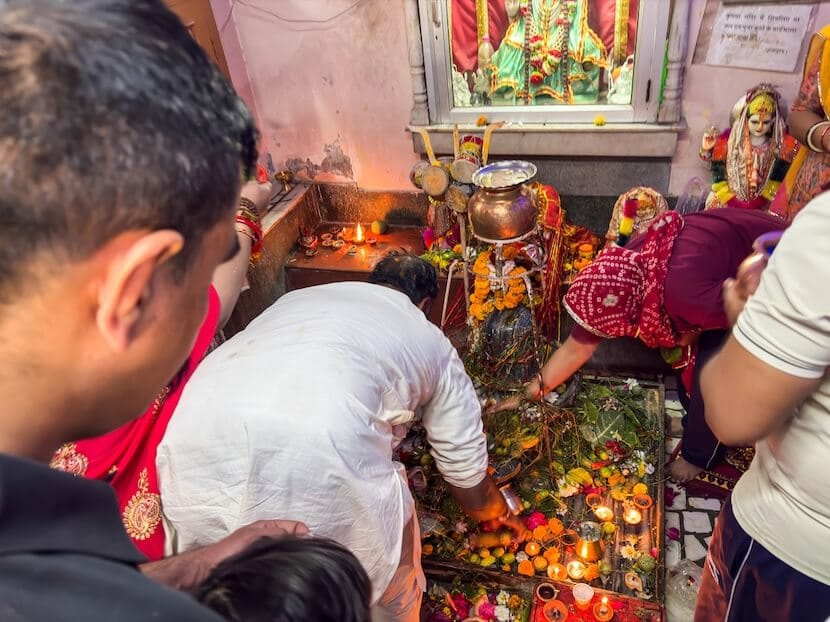
However, myths about Lord Shiva and cannabis form a part of a religious tradition, which includes mythology, oral traditions, regional practices and symbolism. They do not prove that the consumption of cannabis is an essential part of Hindu worship.
This aspect becomes extremely important in places like Varanasi, where one may encounter religious symbols and practices that one may find unknown. The use of cannabis may be a part of a tradition, but Indian spirituality is much more complex and diverse than consumption of cannabis.
Practices such as yoga, meditation, pilgrimage, chanting, fasting, ritual bathing, temple worship, and philosophical study, are all important elements of India’s spiritual traditions.
Bhang, Ganja, and Charas Are Not the Same Thing
One of the key differences for anyone who is visiting this topic is the differences between traditional cannabis preparations.
- Bhang is usually associated with the use of cannabis leaves and consumed in the form of drink or food preparations. Bhang’s cultural significance is especially notable during festival celebrations like Holi and Maha Shivaratri.
- Ganja is usually used to describe the flower or fruiting top of the cannabis plant.
- Charas refers to the resin of cannabis.
The differences above do not only matter from a cultural point of view but also become significant under the Indian legal system. The Narcotic Drugs and Psychotropic Substances Act, 1985 (NDPS Act) gives a very clear definition of cannabis that excludes cannabis seeds and leaves, unless they are accompanied by the flowering or fruiting tops.
This distinction may help understand why bhang has an exceptional status within the Indian cannabis tradition.
Why Varanasi Became Associated With Cannabis and Spirituality
Varanasi, also known as Kashi or Banaras, is a city where spirituality is present in each moment of life. As described by the administration of the district, Varanasi is one of the most ancient living cities of the world and one of the main centers for Hindu pilgrimage. It is strongly connected to Shiva, the Ganges, temples, rituals, learning of Sanskrit, music, philosophy, and religion.
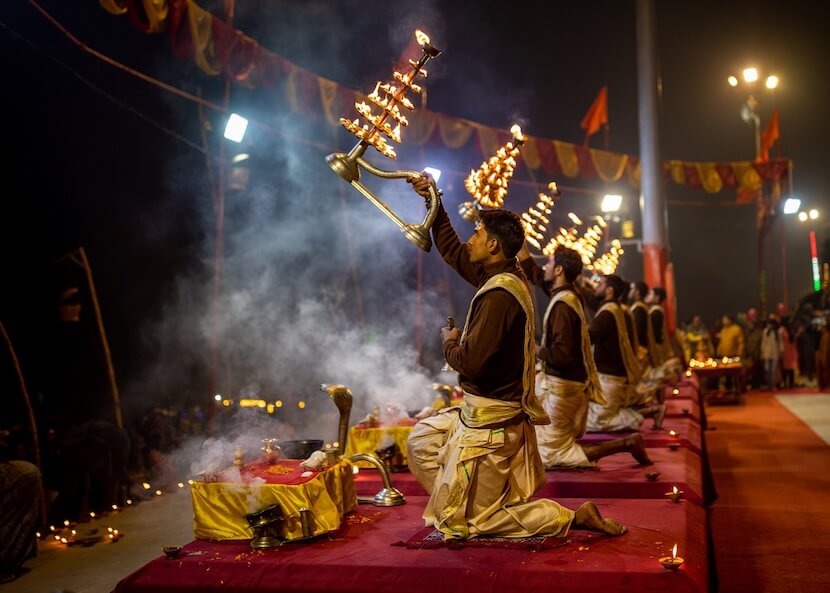
In the ghats, tourists can observe ritual bathing, prayers, cremations, offerings, music, and Ganga Aarti. The city ghats represent the center of religious activities and in the morning there could be yoga, havan, music and other cultural events performed in Assi Ghat.
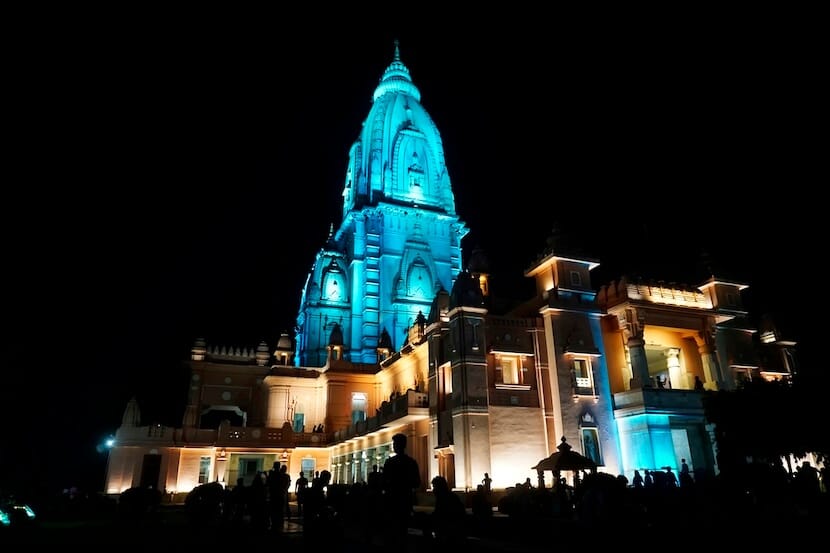
Kashi Vishwanath Temple strengthens the relation of Varanasi to Shiva. It is one of the twelve Jyotirlingas (sacred shrines dedicated to Lord Shiva across India) and one of the most important temples dedicated to Shiva in India. In such a place, the relation of Shiva and cannabis represents a part of the cultural imagery of the city.
Sadhus and the Popular Image of Cannabis
Visitors of Varanasi might come across the sadhus, ascetics, and other spiritual practitioners, whose way of living is significantly different from the conventional city life. It is known that some ascetic groups have used cannabis as part of their rituals. In this respect, the image of Varanasi as the city combining spirituality and cannabis has been formed.
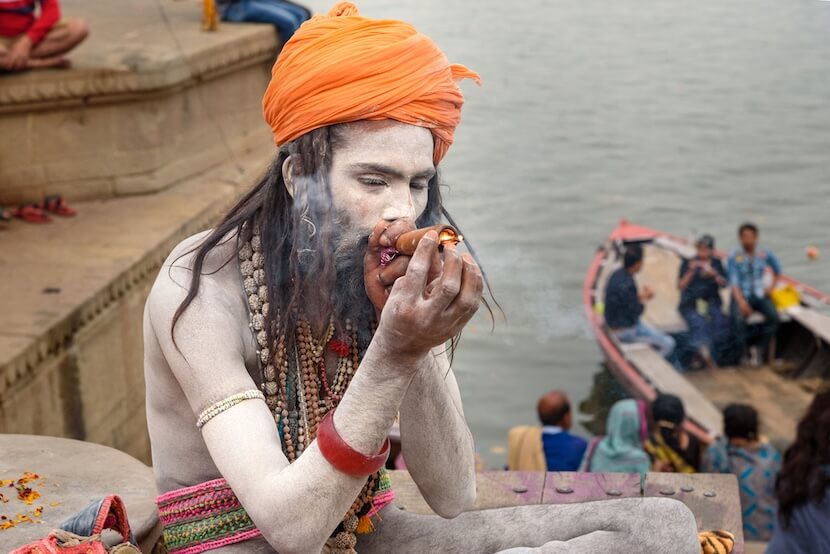
However, not every sadhu uses cannabis. Cannabis is not a prerequisite for meditation or Hindu spirituality, and the presence of cannabis within some ascetic traditions should not be interpreted as representative of Hinduism as a whole.
Moreover, it is important for tourists to understand the difference between observing a cultural practice and participating in it. A visitor can learn about India’s ascetic traditions without treating those traditions as entertainment or assuming that religious symbols constitute permission to consume controlled substances.
Bhang in Varanasi: Tradition Meets Tourism
As highlighted above, bhang is uniquely placed within the cultural history of India. As the NDPS Act only deals with the resin and flowering or fruiting tops of the plant, leaves and seeds without these parts do not fall within the definition of cannabis and are subject to different regulations.
As a result, bhang falls outside the NDPS Act, although the substance is regulated through state legislation and excise. However, this does not make all cannabis products legal in India. The legal position of bhang can vary depending on the state and the specific preparation, licensing arrangements, and applicable excise rules. Therefore, one should never assume that just because a certain product is called bhang, it is legal in all circumstances.
In Varanasi, the product has been incorporated into the tourist experience of the city because of its use during festivals and in Shiva traditions. This creates a paradox. For local people, bhang may be an important cultural and religious symbol. For tourists, however, it may just seem to be a mysterious intoxicating substance from India.
Maha Shivaratri and the Spiritual Meaning of Cannabis
One of the most important festivals dedicated to Shiva is Maha Shivaratri. Throughout India, followers take part in various religious rituals, such as fasting, praying, visiting temples, chanting, meditating, and performing religious ceremonies throughout the night. In some communities, bhang is traditionally associated with the festival.
Historical research confirms that cannabis preparations have been connected with certain Hindu festivals, including Shivaratri and Holi. However, it would be inaccurate to portray cannabis consumption as the defining feature of Maha Shivaratri.
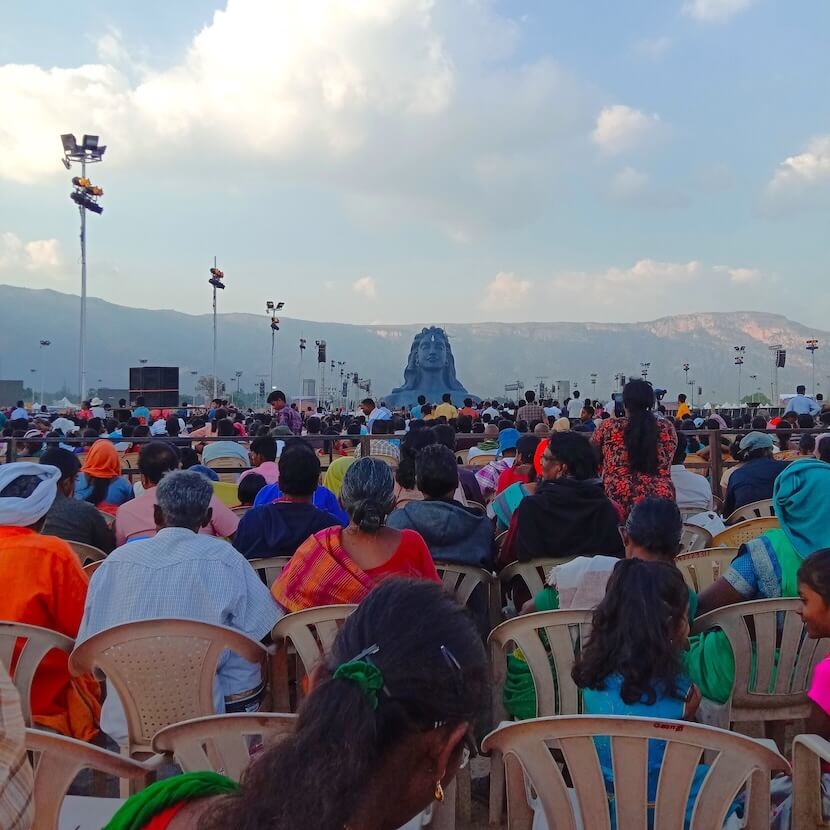
For millions of devotees, the holiday is mainly devoted to honoring Shiva. Fasting, praying, meditating, making offerings, and performing rituals do not require using any cannabis product. This factor is significant in terms of spiritual tourism, as the reduction of the religious holiday to cannabis can destroy its spiritual meaning.
Himachal Pradesh: Mountains, Spiritual Retreats, and Cannabis Culture
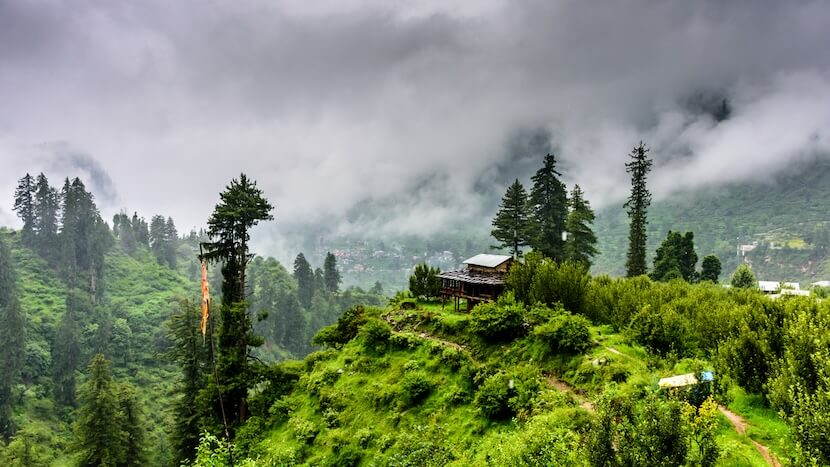
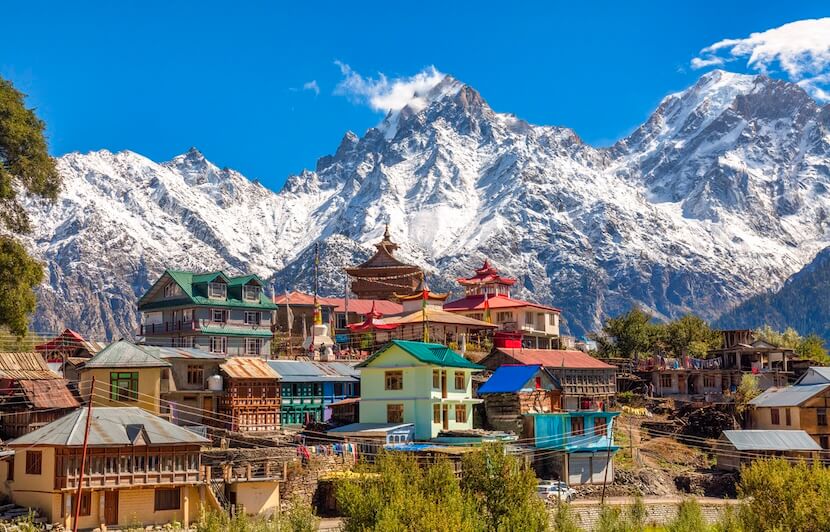
While Varanasi is the representation of India’s urban and river-based spiritual tourism destination, Himachal Pradesh, with its mountainous, forest, temple, monastery, trekking sites, yoga, meditation centers and villages provides an altogether different aspect of spiritual tourism.
Mountains have created an environment for those who love solitude, trekking, meditation and retreats. The region’s appeal existed long before cannabis became part of its tourism image.
Parvati Valley and the Backpacker Culture
The Parvati Valley became internationally known through the growth of backpacker tourism. Locations such as Kasol, Tosh, Manikaran, and other mountain villages came to be associated with long-staying tourists, trekking, music, alternative life-styles, and counterculture tourism.
Gradually, the use of marijuana became one of the features of this image. This was strengthened by the local history of growing cannabis naturally and producing illegal resin in certain areas of Himachal Pradesh.
Nevertheless, the description of Parvati Valley as a cannabis destination disregards other aspects of its cultural and environmental importance. Forests, wildlife, villages, temples, trekking trails, hot water springs, and mountain landscapes are also part of this valley. As an example, Himachal Tourism speaks of the overall Kullu area in terms of its beauty, traditions, religion, and trekking sites.
Malana and the Importance of Cultural Context
The Malana region is among those locations where cannabis tourism narratives have been most prominently portrayed. This remote Himalayan village is located in the Parvati Valley and possesses a unique social and religious framework.
As per Himachal Tourism, Malana is a traditional village that enjoys close association with its own deity called Jamlu Devta, its sacred groves, and old traditions. The remoteness and high-altitude nature of the village have also made it an ideal destination for trekkers.
The international media has usually centered its coverage on the cannabis resin that was known historically in the region. This has led to the creation of a complex dynamic in tourism.
A community with its own cultural identity can become reduced in the eyes of outsiders to a single product associated with the illegal drug trade. Such a portrayal risks turning local culture into a tourist commodity. Tourists should visit the village of Malana viewing it more like a living community with its own traditions than a cannabis destination.
The Hippie Trail and the Internationalisation of Cannabis Tourism
The link between cannabis and the development of Himalayan tourism is also grounded in the wider countercultural movement that took place in the twentieth century.
During the 1960s and 1970s, India became part of the famous Hippie Trail, an overland route travelled by Western counterculture seekers from Europe through the Middle East and South Asia. The movement helped highlight areas where cheap travel, alternative lifestyle, spiritualism, yoga, meditation, and other prohibited or regulated substances could be found.
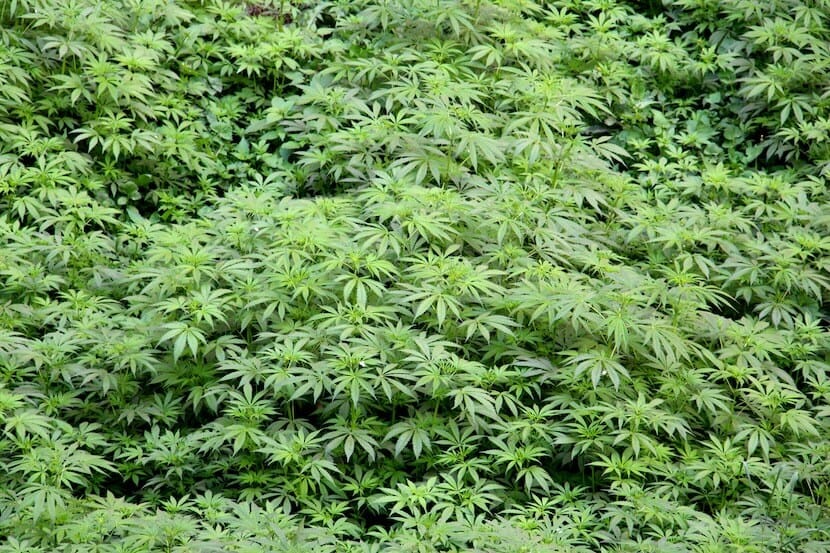
As a result, the Himalayan destinations joined the alternative tourism circuit. Although cannabis was a part of the countercultural image of these locations, the association was not only connected to drugs. Travellers were also seeking distance from conventional lifestyles, religious exploration, music, nature, communal living, and alternative philosophies.
The legacy of that period continues to influence how Western media and travel culture portray places such as Varanasi and Himachal Pradesh.
Cannabis Tourism: Myth Versus Reality
While the term ‘cannabis tourism’ can be useful, it might lead to confusion in India. In countries where recreational cannabis is legal and regulated, cannabis tourism may imply dispensaries, cannabis-friendly accommodation, regulated tours, or designated cannabis-consumption locations.
On the contrary, there is no corresponding cannabis tourism in India. The NDPS Act still makes illegal any number of activities related to cannabis, except those which are explicitly exempted by the law and those which can be carried out under a licence.
Moreover, the NDPS Act specifically singles out the activities of cultivating, manufacturing, possession, selling, buying, transporting, and consuming of prohibited narcotic drugs as activities that are generally unlawful unless otherwise allowed by law.
Thus, the existence of a cannabis culture in a particular region should not be interpreted as evidence that visitors are legally entitled to participate in it.
Why Tourists Can Get the Wrong Impression
There are a few reasons behind the misunderstanding:
- Travellers could find cannabis talked about freely and openly available in some communities.
- The culture of bhang could lead someone into thinking that all cannabis products are legal.
- There is often glorification in travel sites about ‘hidden’ cannabis spots.
- Historical religious connotations could be misinterpreted as a legal right.
It must be clear that none of these factors supersedes Indian laws. A visitor to India is subject to Indian laws just like any other visitor.
Himachal Pradesh: Cannabis Policy Is Changing
The state of Himachal Pradesh stands out as being one of the most important recent cannabis developments in India.
In January 2025, the state Cabinet cleared a pilot program for the cultivation of controlled cannabis for medicinal and scientific use. This project involved agricultural universities and sought to examine regulated cultivation rather than legalisation of recreational cannabis.
By the end of 2025, the state was looking towards adopting an industrial hemp regulatory system in which government pronouncements focused on controlled cultivation, low THC cannabis and industrial, scientific and medicinal uses.
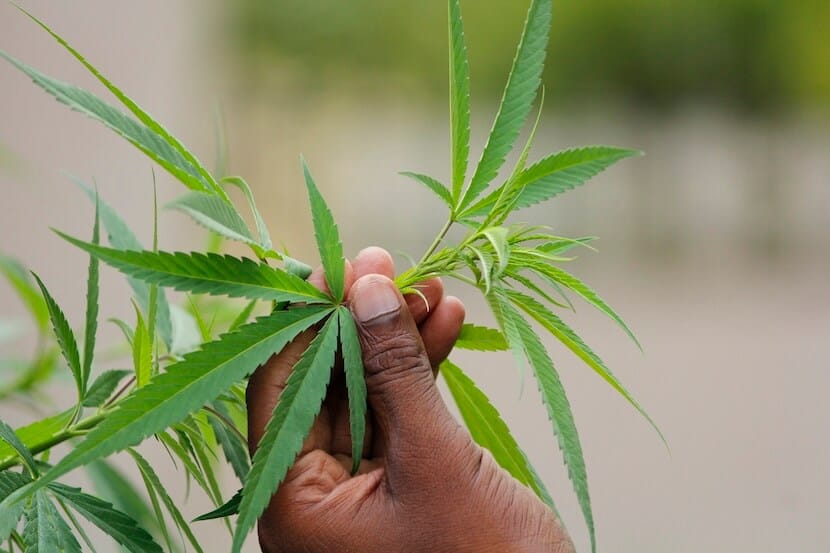
The most important development came in July 2026, when Himachal Pradesh adopted regulations for the controlled cultivation of cannabis. The regulations include certification of indigenous seeds, cannabinoid testing, geo-tagged licensed land, fencing, CCTV, control of access, record-keeping and secured storage of cannabis. Moreover, open field cultivation is not allowed under the new regulations.
The regulations have also included the requirement of processing and manufacturing cannabis products which involves licensing of manufacturing facilities and high capital investment.
Most importantly, for tourism purposes, the new regulations do not represent cannabis legalisation. Himachal Pradesh’s emerging regulated framework is primarily concerned with controlled cultivation and approved uses rather than creating recreational cannabis tourism. This is significant for the state’s future.
The Public Health Dimension
Cannabis tourism discussions often focus heavily on culture and overlook health. It is widely known that cannabis may cause psychoactive effects like changes in perception, memory impairment, altered attention, anxiety, and impaired judgment. The effects may differ greatly depending on factors such as the source, the content of THC, the mode of delivery, the dosage, and individual differences.
Studies conducted in India also reveal considerable weaknesses in the research base of the cannabis issue. For instance, many Indian studies relied on smaller or regional samples and that the need for more reliable research is urgent to learn more about usage patterns and their psychological and medical consequences.
This makes the claims about cannabis being a ‘spiritual medicine’ all the more dangerous. Just because something was used historically does not mean that it is scientifically proven as medicine. Similarly, just because something was used traditionally does not mean that it is safe.
Cannabis and Spiritual Experiences
Sometimes altered states of consciousness are perceived as being spiritual. This is the reason why cannabis has been used in some religious or ascetic practices over time.
However, spirituality doesn’t necessarily need to be under the influence of any drug. This is especially important in the context of contemporary wellness tourism.
Prayer, meditation, yoga, chanting, pilgrimage, breathing exercises, fasting, contemplation, spending time in nature, etc. can also produce amazing experiences without taking any drugs. Moreover, a number of traditional Indian philosophies put more stress on the importance of conscious attention instead of getting intoxicated.
A Different Way to Experience Spiritual Tourism
Visitors to Varanasi and Himachal Pradesh do not need cannabis to experience the spiritual character of either destination.
At Varanasi, visitors can take in the sunrise on the River Ganges, witness the Ganga Aarti ceremony, go temple-visiting, learn about traditional music and craft, undertake yoga or meditation practices, and understand Hindu philosophy.
Similarly, in Himachal Pradesh, visitors can visit mountain monasteries, temples, meditation centres, forest walks, villages, and Himalayan scenery. The tourism development infrastructure within the state indicates an interest in developing nature, culture, adventure, and wellness-based tourism experience rather than a single-substance tourism model.
Responsible Cannabis and Spiritual Tourism
Responsible tourism starts with recognising that curiosity about cultures does not give you a legal right. Before traveling, travellers must be well aware of the Indian and state laws, and should not assume that practices observed among locals are automatically lawful for tourists.
Secondly, tourists should also refrain from purchasing cannabis illegally. Besides legality, ethics is another consideration. Lastly, people’s religion must not become a spectacle for tourists. Communities should not become mere backdrops of the destination. For instance, destinations such as Malana should not only be promoted as a place where tourists can consume cannabis because they have their own distinct culture, religion, ecology, and history.
Similarly, Varanasi should not be promoted for cannabis culture alone. A city with its centuries-old spiritual identity needs to be known through its temples, ghats, music, philosophy, architecture, literature, and community and not merely for its association with bhang.
Conclusion
Cannabis is one part of a complicated history of spiritual tourism in Varanasi and Himachal – it is not the whole story. Yes, cannabis and spirituality have a long intertwined history in India, but it is much more complex than the cliché of India being a land of cannabis and spiritual enlightenment.
The link between Varanasi and cannabis can be traced primarily due to its association with Lord Shiva city and its rich history of bhang. However, the spiritual value of the city goes well beyond cannabis and involves Ganga, temples, pilgrimages, music, philosophy, yoga, ritual, and thousand years of religious life.
Himachal Pradesh is quite a different case. The cannabis association of this region is related to its traditional cultivation, illicit charas manufacturing, and foreign backpacker subculture which turned part of the Himalayas into an attractive destination for those interested in cannabis use. Today, the policy towards cannabis in this region is changing into legal cultivation for certain industrial, medicinal, and scientific purposes, but not for recreational purposes.
So, the most appropriate approach for modern tourists today would be to look at the destinations in terms of their history and culture rather than their association with cannabis. The real charm of these destinations is the opportunity to experience the living tradition through pilgrimages, meditations, nature, architecture, people, cuisine, music, philosophy, and spirituality.



Leave a Comment