


In 2022, Thailand made international headlines by becoming the first country in Asia to decriminalise cannabis. For a region known for strict drug enforcement, the move marked a groundbreaking shift in policy and a bold bet on a new kind of economy. Within months, dispensaries opened across the country, tourists embraced the new green wave, and cannabis was hailed as both a wellness tool and a symbol of progress.
Fast forward to mid-2025, and that momentum has sharply reversed. A new set of government rules has reclassified cannabis buds as a controlled herb, restricted all sales to prescription-only, and placed Thailand’s once-booming cannabis industry in a state of uncertainty. Thousands of businesses, from small farms to dispensaries, are now scrambling to navigate unclear regulations or risk closure.
So, how did Thailand go from regional trailblazer to policy reversal in just three years?
This article examines the factors that led to Thailand’s rapid shift, from the government’s initial goals and the subsequent cannabis boom, to the regulatory gaps and political friction that ultimately led to the current ban on recreational use. For countries exploring cannabis reform, Thailand offers an important case study: not of failure, but of what can happen when legalisation outpaces infrastructure.
Table of Contents:
- What the Government Thought it Was Doing
- What Went Wrong
- Politics, Power, and Prohibition
- The 2025 Crackdown
- Who’s Hurting the Most?
- What Happens Now?
- Conclusion: A Lesson in Growing Pains
What the Government Thought It Was Doing
When Thailand decriminalised cannabis in 2022, it wasn’t positioned as a free-for-all. The move was framed as a strategic, multipurpose reform aimed at strengthening the economy, modernising public health infrastructure, and correcting systemic issues in the country’s justice system. Officials emphasised that the goal was not to promote recreational use, but to develop a controlled cannabis market with medical and economic benefits at its core.
Public Health Reform
Cannabis reentered Thai society through the lens of medicine and wellness. The plant had long-standing ties to traditional Thai healing practices, and policymakers saw an opportunity to incorporate it into both traditional and modern care systems. In 2018, Thailand became the first country in Asia to legalise medical marijuana, paving the way for more significant reform in 2022.
That year, the government officially removed cannabis plant parts from Thailand’s Narcotics Code, where it had been listed under Category 5: a designation used for plant-based narcotics such as opium and psilocybin mushrooms.
The government framed the move as a way to increase access to cannabis for medical purposes, especially for patients managing chronic pain, chemotherapy-related symptoms, and other conditions. Public Health Minister Somsak Thepsutin, reiterated in 2025, “cannabis is permitted for medical use only,” underscoring that the original goal of decriminalisation was not to promote recreational consumption, but to modernise the country’s healthcare offerings.
Reducing the Prison Population
Cannabis decriminalisation also played a role in addressing Thailand’s overcrowded prison system. Before 2022, drug-related charges made up a significant portion of the country’s prison population. Over 80% of inmates were incarcerated on drug offences, according to Thailand’s Justice Ministry.
Following the removal of cannabis from the narcotics list, thousands of people with cannabis-related convictions were released or had their charges dropped. In the first year alone, the Department of Corrections reported that over 4,200 inmates were freed due to changes in the law. Decriminalisation thus served a dual purpose: modernising policy and relieving pressure on the penal system.
Creating Economic Opportunity for Farmers
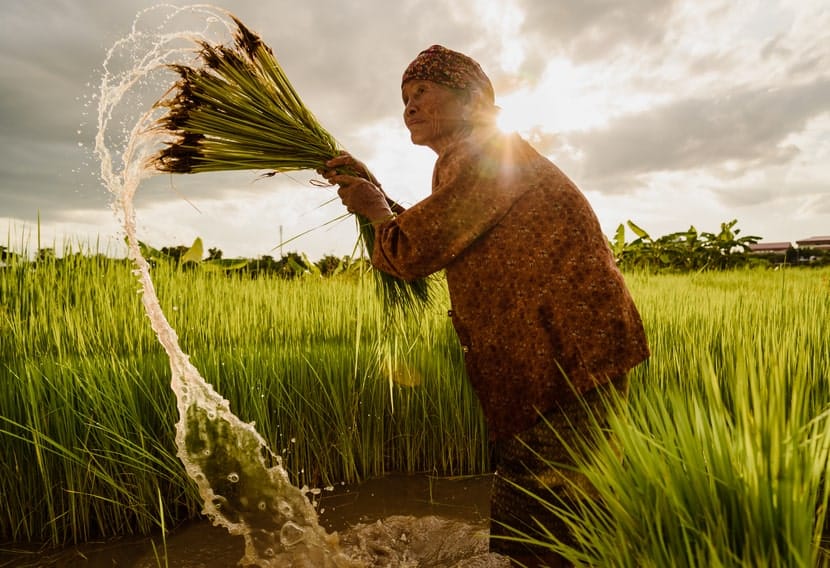
Cannabis was also framed as a high-value agricultural opportunity, especially for small-scale farmers. With the Thai economy still recovering from the COVID-19 pandemic and many rural communities facing declining crop prices, cannabis was promoted as a new, profitable alternative to rice and rubber.
The government launched licensing schemes for household cultivation, with over one million people registering to grow cannabis for personal or commercial use within the first year. Bhumjaithai Party leader Anutin Charnvirakul, one of the strongest champions of cannabis reform, called the plant “an economic crop” and stated that “people should be able to grow it and make a living.”
Positioning Thailand as a Regional Leader
There was also a geopolitical strategy behind the move. By decriminalising cannabis, Thailand aimed to differentiate itself from neighbouring countries that maintain strict drug laws. The ambition was to become Asia’s cannabis capital, attracting international investment, developing export channels, and fueling innovation in cannabis research and medical product development.
In 2022, the Ministry of Commerce projected that the Thai cannabis industry could be worth over 43 billion Thai baht (~1.2 billion USD) by 2025. Policymakers framed the shift as a way for Thailand to lead the region into a more modern era of drug policy, while benefiting economically and scientifically in the process.
What Was Missing
The problem wasn’t with the goals themselves. Many of the ambitions behind cannabis decriminalisation were forward-thinking. The issue was how quickly the policy was implemented without the necessary legal or logistical frameworks to support it.
The government decriminalised cannabis before passing a formal cannabis bill, which meant there were no clear rules on how the plant could be used, grown, sold, or regulated. Businesses operated in a legal grey area. Medical use was technically the only approved category, but with no verification systems, no prescription requirements, and minimal enforcement, thousands of recreational dispensaries were able to open with little oversight.
There was also no infrastructure in place to monitor product quality, prevent underage access, or guide medical professionals on proper cannabis usage. This led to widespread confusion among businesses, consumers, and even government officials about what was allowed and what wasn’t.
In the rush to become a regional leader, Thailand skipped over essential steps: building a licensing system, offering compliance guidance, creating public education campaigns, and supporting farmers and small businesses with training and resources.
What started as a progressive reform eventually became an unregulated boom—and that’s where the trouble began.
The Decriminalisation Era (2022–2024)
For a brief moment, Thailand became the most cannabis-friendly country in Asia, not just on paper, but in daily life. After cannabis was removed from the country’s narcotics list in 2022, the streets of Bangkok, Chiang Mai, and coastal towns like Pattaya saw a green wave unlike anything the region had experienced before.
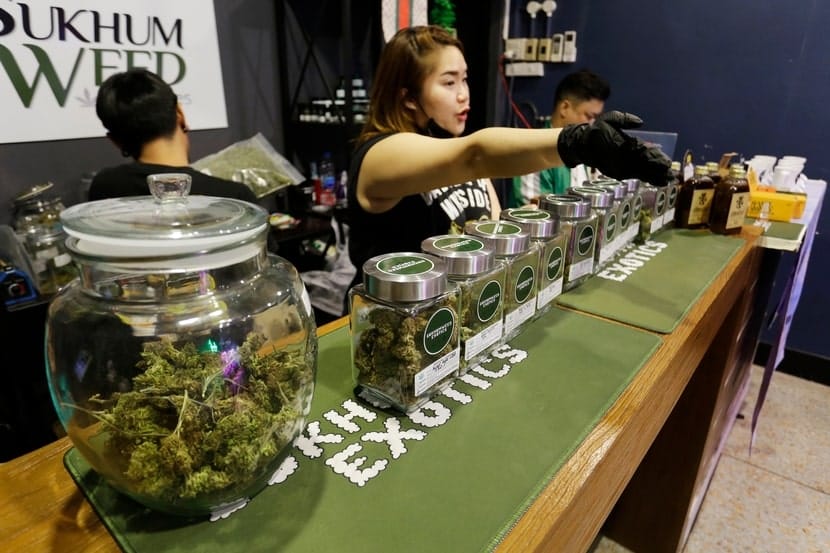
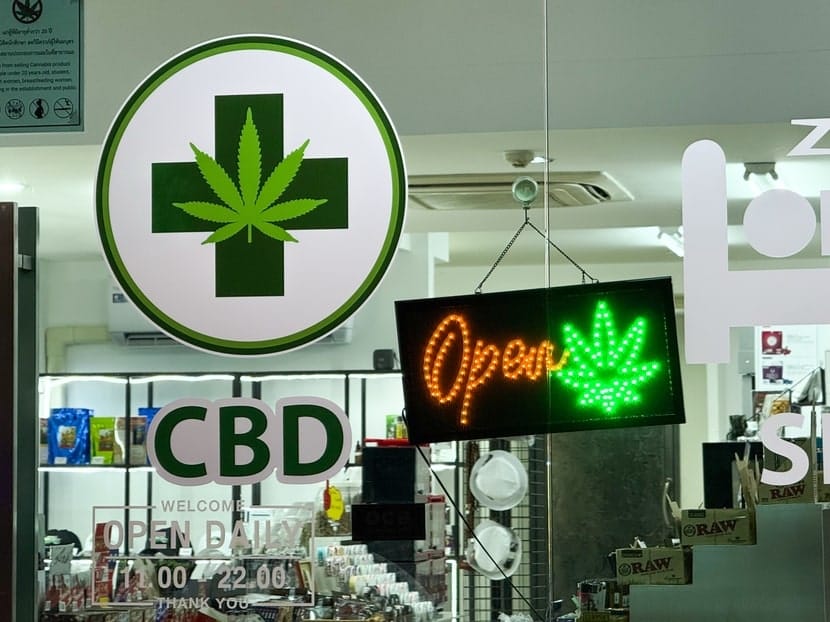
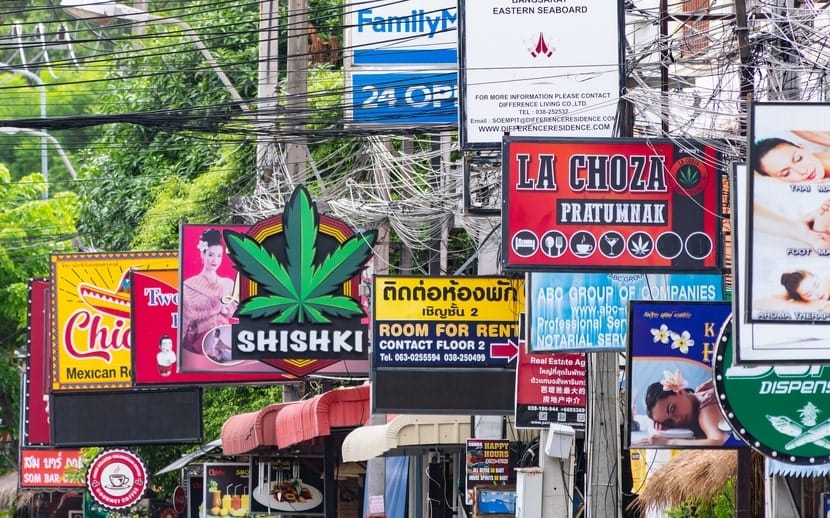
Dispensaries, cannabis cafés, and weed-themed storefronts popped up seemingly overnight. Along the famous backpacker hub of Khao San Road, neon signs in the shape of marijuana leaves lit up the street. Shops offered buds with names like “Giggly Zaza” and “Energy Boost,” catering to both curious tourists and locals. According to reporting from The Guardian, many vendors operated without formal medical oversight, openly selling flower, gummies, and pre-rolls to walk-ins, no prescription necessary.
By early 2024, industry insiders estimated 10,000 to 18,000 dispensaries were operating across Thailand. Some shops hosted DJs or infused cooking classes. Others doubled as art spaces or yoga studios. Wellness spas incorporated cannabis into massage oils and facials. Cannabis cafés sold iced teas and desserts with CBD or low-dose THC infusions. The vibe was creative, chaotic, and—for many—exciting.
At events like the Bangkok Cannabis Expo, brands distributed samples and promoted international partnerships. One festival even featured Mike Tyson, who promoted his line of cannabis gummies shaped like ears and boxing gloves.
But even in the midst of this rapid expansion, not everyone was celebrating. A cannabis activist named Kitty Chopaka, who owned a dispensary at the time, described it this way:
“Even past rules weren’t properly enforced … When there’s no enforcement, there’s just no way I can compete.”
Without clear regulation, some shop owners tried to self-police, limiting access to adults or maintaining lab-tested inventory. Others simply followed market demand. And with tourists fueling much of the interest, many businesses leaned into the perception that Thailand had fully legalised cannabis for fun and leisure.
For many, this era represented both opportunity and uncertainty. The economic potential was real. So was the confusion. While dispensaries thrived, there was no formal licensing framework, no supply chain oversight, and no legal language to define who could sell what, to whom, or why.
Still, for two years, the atmosphere on the ground reflected something rare: a cannabis moment that felt wide open.
What Went Wrong?
While Thailand’s cannabis boom was lively and fast-moving, the lack of structure beneath it created serious challenges over time. What started as a loosely framed experiment in reform gradually became a source of confusion for the public, for businesses, and for the government itself. Without a proper legal foundation to support the industry, cracks began to appear quickly.
A Regulatory Vacuum
One of the core issues was that Thailand decriminalised cannabis before passing any kind of comprehensive cannabis law. That meant there were no clearly defined rules around what qualified as medical use, who could sell cannabis, how products should be tested, or how consumers could access them responsibly.
Guidelines were introduced piecemeal—banning use in schools, discouraging sales to minors and pregnant women—but there was no single agency in charge of enforcing them. In many cases, enforcement didn’t happen at all. As cannabis culture grew more visible, so did frustration from officials who felt the rollout had moved too fast without adequate control.
“There was no real effort to educate the public,” said one cannabis shop owner. “The regulations that were issued weren’t seriously enforced either.”
Rising Public Concerns
By 2024, concerns about cannabis misuse began to mount. News reports cited growing unease about underage use, addiction, and cannabis being smoked in public spaces, especially in tourist-heavy areas like Phuket and Pattaya. Officials also began to warn that cannabis was being treated too casually, with some citing the smell of cannabis in public and around schools as a sign that the situation had gotten out of hand.
A study by Thailand’s Office of the Narcotics Control Board reportedly found that cannabis addiction cases had increased significantly after decriminalisation. Some health officials and members of the public began to push for a stricter approach.
“Cannabis addiction is rising and has become a social issue,” said Public Health Minister Somsak Thepsutin in 2025. “It affects children, causes nuisance from unwanted odours… public safety must come first.”
International Headlines and Smuggling
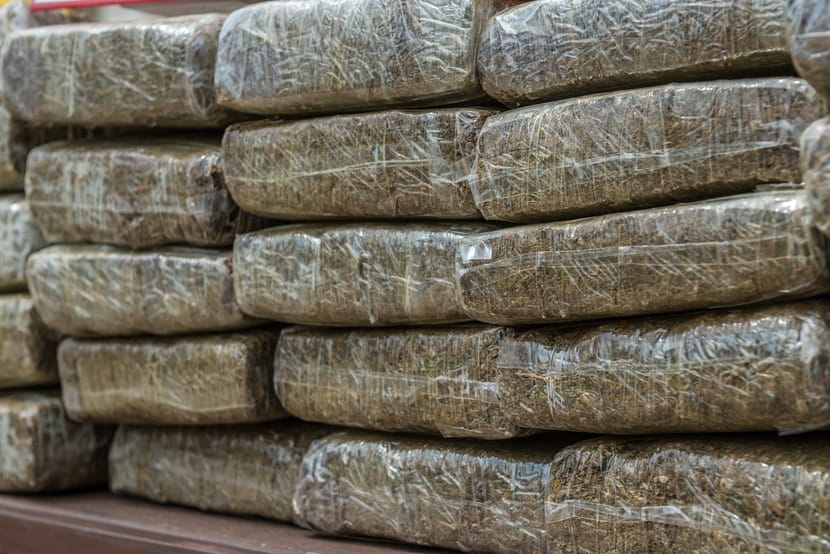
The unregulated landscape also led to a spike in cannabis being smuggled out of the country illegally. Several high-profile cases made international news, including tourists flying out of Bangkok with cannabis in their luggage, who were later arrested in countries like the UK, Georgia, and Sri Lanka. Between late 2024 and early 2025, over 800 people were arrested for cannabis smuggling, with more than nine metric tons of cannabis seized, according to reports from British and Thai authorities.
The rise in smuggling fueled criticism that the cannabis boom was not just a domestic issue, but one that could impact Thailand’s international relationships if left unaddressed.
Political Tension and Shifting Optics
As public sentiment began to shift, so did political momentum. What was once framed as an economic opportunity and public health initiative was now being portrayed as a policy failure. Cannabis became a symbol of disorder and, for some parties, a way to draw political lines.
The Bhumjaithai Party, which had championed cannabis reform, faced increasing pressure from its coalition partners. The Pheu Thai Party, which had opposed recreational use from the start, began pushing harder for a crackdown. When Bhumjaithai exited the coalition in 2025, it opened the door for the new administration to introduce more restrictive laws.
Over time, the optics changed. What started as an effort to modernise Thai policy began to look to some lawmakers and media outlets like a chaotic social experiment with too few rules and too many consequences.
The Breaking Point
Taken together, these issues—both inside and outside Thailand—began to erode the public’s confidence in the cannabis rollout. Domestically, concerns around youth access, cannabis in schools, and public use reflected real discomfort with how visible and unregulated the market had become.
While cannabis is not considered physically addictive, it can be habit-forming, and reports of increased daily use or inappropriate sales to pregnant women and minors have raised red flags about the lack of oversight. For many, the smell of cannabis in public spaces and headlines about casual use near schools were less about the plant itself and more about a perceived breakdown in social norms.
Internationally, cannabis smuggling created diplomatic headaches and reputational risks. Countries with strict drug laws, like Sri Lanka or Singapore, viewed the export of cannabis from Thailand as a violation of their sovereignty. For Thailand, those incidents risked undermining the country’s tourism credibility, damaging foreign relations, and casting doubt on its ability to control its own industry. These global optics made the government’s hands-off approach harder to defend.
What started as a cannabis experiment grounded in economic optimism and public health goals had, by 2024, become increasingly viewed as unmanageable. With rising public concern, international scrutiny, and growing calls for accountability, the question was no longer if there would be a policy shift, but when, and who would lead it.
Politics, Power, and Prohibition
The cannabis crackdown in Thailand wasn’t driven by public health concerns alone. It was also a product of political turbulence, marked by shifting coalitions, internal party divisions, and long-standing disagreements about how cannabis reform should be handled. While many observers agree that tighter regulation was inevitable, the timing and tone of the 2025 reversal were deeply shaped by changes in political leadership.
From Campaign Promise to Policy Reversal
Cannabis decriminalisation in 2022 was largely championed by the Bhumjaithai Party, a political group that had built part of its platform around cannabis reform. Then, Health Minister Anutin Charnvirakul, one of the party’s most visible figures, played a central role in pushing to remove cannabis from Thailand’s list of narcotic substances. The move was positioned as a way to modernise healthcare, create economic opportunity, and reduce incarceration rates.
But not everyone in government supported the change. The Pheu Thai Party, a dominant political force in Thailand, expressed concerns early on, particularly about recreational use and the lack of clear legal boundaries. When Bhumjaithai and Pheu Thai formed a coalition government following the 2023 elections, cannabis regulation became a point of tension.
A Coalition Fallout and a Political Opening
In mid-2025, that tension came to a head. The Bhumjaithai Party exited the ruling coalition after a separate political controversy involving leaked communications between the prime minister and Cambodian officials. Their departure gave Pheu Thai the space and political cover to move forward with the stricter cannabis policies they had long supported.
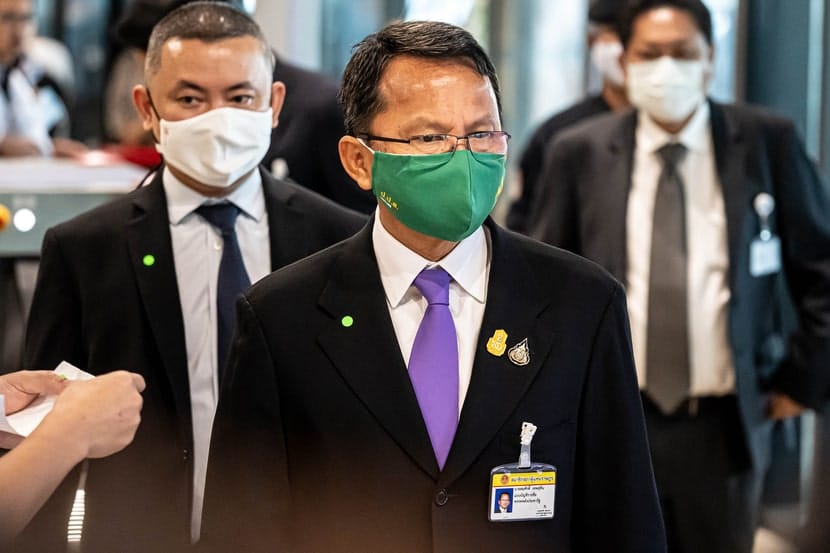
Just days later, Public Health Minister Somsak Thepsutin, a Pheu Thai appointee, announced the new regulations banning recreational cannabis and reclassifying buds as a controlled herb. For many, the swiftness of the pivot underscored how much cannabis policy had become a political lever, less about health or economics, and more about asserting control and restoring order.
“Thailand had always been known for sabai sabai [easygoing, lax] culture… with many illegal products… managed locally,” said activist Kitty Chopaka in an interview with TIME. “With the new announcement, cannabis will just become another thing that goes back underground.”
Public Opinion Shifts
By the time the crackdown was introduced, public sentiment had also started to shift. Concerns around public intoxication, youth access, and international headlines about smuggling had taken their toll. A 2024 survey showed that a majority of Thai citizens supported relisting cannabis as a narcotic: a sign that many viewed the unregulated period as too chaotic to continue without major intervention.
While not everyone agreed with the return to a stricter model, the combination of political opportunity and public pressure provided lawmakers with the necessary support to move forward. What began as a bold, progressive reform had become politically risky, and for many in power, the backlash was easier to manage than the uncertainty of continued ambiguity.
The 2025 Crackdown
With all of these factors at play, Thailand’s government formally reversed course on cannabis policy in June 2025. A new set of rules announced by the Ministry of Public Health and published in the Royal Gazette reclassified cannabis buds as a “controlled herb” and banned their sale to anyone without a medical prescription. The decision marked the country’s most significant regulatory shift since decriminalisation in 2022, effectively ending the short-lived era of recreational access.
Officials emphasised that the policy was not a return to criminalisation, but a move to reestablish control over how cannabis is produced, distributed, and consumed. Public Health Minister Somsak Thepsutin stated that cannabis would be permitted for medical use only, and that the reforms were intended to improve public safety and close the legal vacuum left by earlier reforms.
Key Provisions of the New Rules:
- Retail cannabis sales require a prescription from a licensed medical professional (including Thai, Chinese, or traditional medicine practitioners).
- Cannabis buds are reclassified under the country’s herbal control laws, making them subject to stricter oversight.
- Licensed shops must:
- Source all products from certified pharmaceutical-grade farms
- Register with the government
- Report sourcing and sales data monthly
- Keep detailed customer records for verification
- Cannabis cannot be sold:
- Online
- Through vending machines
- In public areas such as parks, temples, dormitories, or amusement venues
- Public consumption is banned, with enforcement falling under public nuisance laws.
- Penalties for noncompliance include up to 1 year in jail or a fine of 20,000 baht (roughly 550 USD).
A Chaotic Rollout
While the new rules were framed as necessary, their rollout was anything but smooth. Business owners and officials alike have described the transition as confusing and unclear. Some shop owners reported being told to register as medical clinics, while others said they were still waiting for instructions from health authorities. Even enforcement officers reportedly struggled to interpret the changes, particularly in provinces where cannabis businesses had become deeply integrated into the local economy.
Some businesses have attempted to adapt by requiring customers to present medical certificates. Others have scaled back their offerings or temporarily shut down while waiting for further guidance. In Bangkok, dispensaries along Khao San Road report a sharp drop in foot traffic, with staff citing confusion among both locals and tourists.
A System in Flux
The Health Ministry has promised that more formal legislation is coming, but in the meantime, cannabis shops must either comply with the new medical model or face closure. Enforcement is expected to intensify in the coming months, although no official deadline has been set.
At present, Thailand’s cannabis market sits in a legal limbo. While cannabis is not entirely re-criminalised, access has been drastically narrowed, and thousands of businesses now face an uncertain future. The move has also raised new questions about who will be able to stay in the industry and whether smaller operators—especially independent growers and dispensary owners—can survive under the new rules.
Who’s Hurting the Most?
There’s a strong case to be made that rebuilding Thailand’s cannabis system from the ground up is necessary. After all, the previous approach lacked regulation, enforcement, and long-term planning, and both domestic and international pressure made inaction increasingly untenable. But while the government may be trying to regain control, that course correction is coming at a real cost. And the people paying for it are largely the ones who helped the industry grow in the first place.
Small Shops and Independent Operators
Many of the thousands of dispensaries that opened between 2022 and 2024 were not corporate franchises or large-scale operations. They were family-run shops, small entrepreneurs, and community growers who invested time, energy, and money into what they believed was a legal and promising business.
Now, those same businesses are facing closure or scrambling to pivot into a tightly controlled medical model that many simply can’t afford. Hiring a licensed doctor, upgrading facilities, sourcing from certified farms, and navigating unclear government registration processes—all of it is out of reach for many small players.
“Most of the registered shops will shut down,” said Bangkok dispensary owner Natthakan Punyathanaworakit after closing one of her three cannabis shops in June. “Many will likely go underground.”
Cannabis activist Kitty Chopaka added: “It’s the little guys—the mom-and-pop shops, the family businesses where the wife is trimming and the husband is growing—those are the ones that will suffer.”
For those who followed the rules as best they could during the legal grey period, the sudden reversal feels like a betrayal. They were handed the keys to a castle, told that cannabis decriminalisation could support them, and now they’re being told they have to give those keys back and try something else.
Farmers and Supply Chain Workers
Thailand’s cannabis reform was intended to benefit rural economies by providing farmers with a new, high-value crop. Over one million people registered to grow cannabis following decriminalisation, and many made significant investments in seeds, land, infrastructure, and labour.
But the new rules favour suppliers who can meet strict pharmaceutical-grade standards: something most small-scale growers weren’t prepared for and likely can’t afford. Without access to the regulated supply chain, many of these farmers will be excluded from the industry entirely.
One grower told CNN that small farms are already seeing contracts disappear and may be forced to sell their harvests at a loss or destroy them entirely. Others fear the rise of a two-tiered system, where wealthy investors gain access while independent cultivators are locked out.
“They have a lot of knowledge, but they cannot grow anymore because they cannot compete with the big companies,” said Oler Silasilarat, a worker at a cannabis shop in Bangkok.
Tourism and the Service Economy
Cannabis became a major attraction for visitors in Thailand’s post-pandemic recovery. Dispensaries, infused cafés, wellness spas, and cannabis-themed tours all catered to a growing base of international travellers curious about legal weed in Asia. Some tourism hotspots built their local economies around cannabis traffic.
With the new rules in place and a clear message that Thailand is no longer open to recreational use, tourism businesses are feeling the ripple effects. Shops on Khao San Road have reported dramatic drops in foot traffic. Tourists are unsure what’s legal and what isn’t, and many are steering clear altogether.
“It’s going to affect [profits] because the tourists, they’re scared,” said one staff member at a dispensary called iStoned.
The tourism slowdown doesn’t just affect dispensary owners, though. It hits hospitality workers, café staff, taxi drivers, street vendors, and other local businesses that rely on steady tourist flows.
Medical Patients and Low-Income Consumers
While medical cannabis is still technically legal, access has become more complicated. Patients must now obtain a prescription—sometimes from a specific type of practitioner—and shops must keep records and restrict quantities to a 30-day supply.
In practice, this introduces new financial and logistical barriers for patients who previously had no trouble accessing cannabis. Critics argue that it places an unfair burden on low-income users and creates a system where access depends on who can afford a doctor’s visit, rather than on who needs relief.
Even those who agree with the need for stronger regulation recognise that the transition has left many behind. For now, the future of Thailand’s cannabis economy remains uncertain. But for the people who built their lives around it, the cost of the crackdown is already being felt.
What Happens Now?
With the cannabis boom behind them and the new restrictions still taking shape, Thailand’s cannabis industry now finds itself in limbo. Dispensaries, farmers, and consumers are all adjusting to a reality where the rules have changed, but no one is quite sure what the new system will look like.
A formal cannabis bill is reportedly in development, but for now, the industry operates under temporary health ministry orders. Businesses that want to stay open are doing what they can—some are shifting toward wellness services, others are asking customers for prescriptions, and many are simply waiting. Licensing requirements, enforcement standards, and timelines for compliance vary from province to province, adding to the uncertainty.
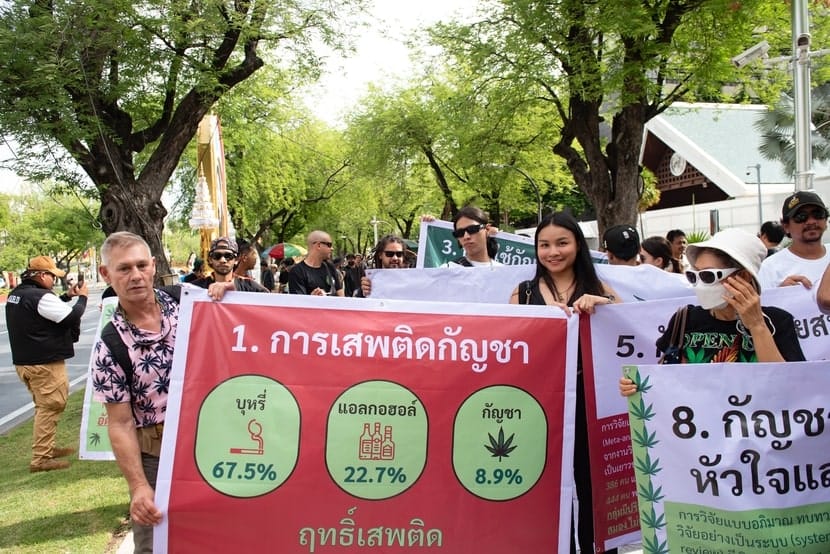
Meanwhile, cannabis advocates are continuing to organise. Protests have taken place outside the Health Ministry, calling for legislation that protects small businesses and ensures fair, affordable access to medical cannabis. Their core message: regulation is necessary, but it needs to be clear, consistent, and enforceable—otherwise, the country risks pushing the industry back underground.
Already, there are signs that’s happening. Some unlicensed growers are turning to informal markets to offload their supply, and a few shuttered dispensaries have resumed sales behind the scenes. It’s not difficult to imagine the same problems returning, only with less visibility and fewer safeguards.
Thailand’s next steps will matter far beyond its own borders. As the first Asian nation to decriminalise cannabis, it became a reference point for countries across the region. Now, those same countries are watching to see whether Thailand can rebuild a functional, trusted medical framework—or whether this backtrack will discourage reform elsewhere.
At this stage, several paths are still possible:
- A structured, medically focused cannabis model with clear licensing and enforcement
- A compromise model that allows limited recreational use under strict regulation
- A full reclassification of cannabis as a narcotic, re-criminalising its use entirely
For now, Thailand stands at a crossroads, trying to balance political pressure, public safety, economic fallout, and global perception. The decisions made in the months ahead will determine not just the future of cannabis in Thailand but how reform is imagined across Asia.
Conclusion: A Lesson in Growing Pains
Thailand’s cannabis journey has been anything but linear. In just a few years, the country went from regional pioneer to regulatory cautionary tale, capturing global attention for both its bold leap forward and its abrupt change of course.
The truth is, none of this happened in a vacuum. Thailand’s original ambitions were thoughtful: reduce incarceration, support farmers, modernise healthcare, and stake a claim as a regional leader. But without the infrastructure to support those goals (licensing systems, education, enforcement, and guardrails), the rollout unravelled under its own momentum.
What’s happening now isn’t so much a reversal as it is a reset. Thailand is attempting to regain control of an industry that has grown faster than the rules intended to regulate it. That’s not unique to cannabis or to Thailand. It’s a pattern we’ve seen play out in various forms around the world: rapid reform followed by regulatory whiplash when the groundwork isn’t strong enough to hold.
For other countries considering cannabis reform, Thailand offers something invaluable: a case study in what to avoid and what to plan for. Legalisation without regulation doesn’t just create chaos; it opens the door to public backlash, political instability, and unintended consequences that are harder to fix later.
The months ahead will be critical. Whether Thailand succeeds in building a sustainable, medically focused cannabis system, or takes a harder turn back toward prohibition will send a clear signal to the rest of Asia and beyond.
Because, as this story shows, it’s not just about going legal. It’s about what comes next.



Article Comments