

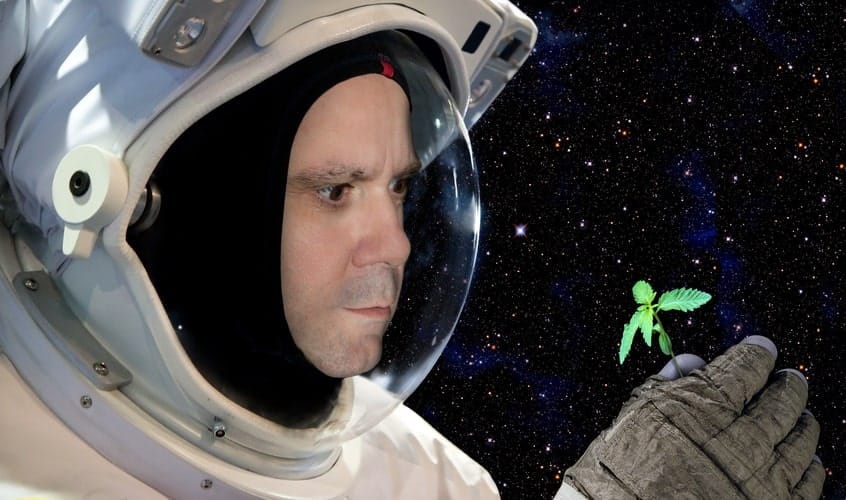
By now, it almost feels like common knowledge: weed has been to space. You’ve seen the memes, heard the rumors, and maybe even scrolled past that infamous photo of astronaut Chris Hadfield floating through the International Space Station with what looks like a giant bag of weed. (For the record, it was actually a bag of Easter eggs. The internet did the rest.)
Still, the image struck a nerve. If anyone were to casually bring weed into orbit, it might be the guy who sang Bowie’s “Space Oddity” in zero gravity.
In reality, cannabis isn’t being sent to space so astronauts can light up. But it is being sent out there on multiple missions, in different forms, for reasons that have nothing to do with recreation and everything to do with research. From hemp seeds aboard the International Space Station to cannabis cell cultures flown via SpaceX, this plant keeps showing up in low-Earth orbit. And it turns out, there are good reasons for that.
When you strip away the memes and myths, there’s a deeper story unfolding. One that ties cannabis to climate resilience, biotechnology, and the future of life beyond Earth. Why this plant? Why now? And what are we hoping to learn by sending it 400km above the ground?
Let’s break it down.
Table of Contents:
- What Makes Cannabis a Good Candidate for Space Research?
- What Weed In Space Is Teaching Us (So Far)
- Why Cannabis Over Other Edible Crops?
- Key Missions and Organisations: A Timeline of Weed in Space
- 1970s—1990s: Space Plant Biology Grows—But Not Cannabis
- Early 2000s: Mutation Breeding Takes Off
- 2011: First Gravity Stress Tests with Cannabis Seeds
- 2013—2017: Weather Balloons, Viral Headlines, and “Space Weed” Stunts
- 2016—2019: Cannabis Cultures Reach the International Space Station
- 2020—2023: A Global Shift in Perspective
- 2024: Laws Loosen, Access Expands
- 2025: MayaSat-1 Becomes the First Dedicated Cannabis Space Mission
- What’s Next?
- What Weed in Space Could Mean for the Future
- Final Thoughts: So, Why Does Weed Keep Ending Up in Space?
What Makes Cannabis a Good Candidate for Space Research?
Cannabis isn’t the only crop hitching rides to space. In recent missions, scientists have sent seeds, fungi, algae, and even strands of human DNA into orbit to test how life responds to the stress of spaceflight. The goal? To understand what it takes for biological systems to survive beyond Earth, and how we might one day grow food, medicine, and materials on other planets.
So why cannabis? It may not be an essential food crop, but cannabis checks several boxes that make it ideal for space-based research, and potentially useful for building future life-support systems in low-resource environments.
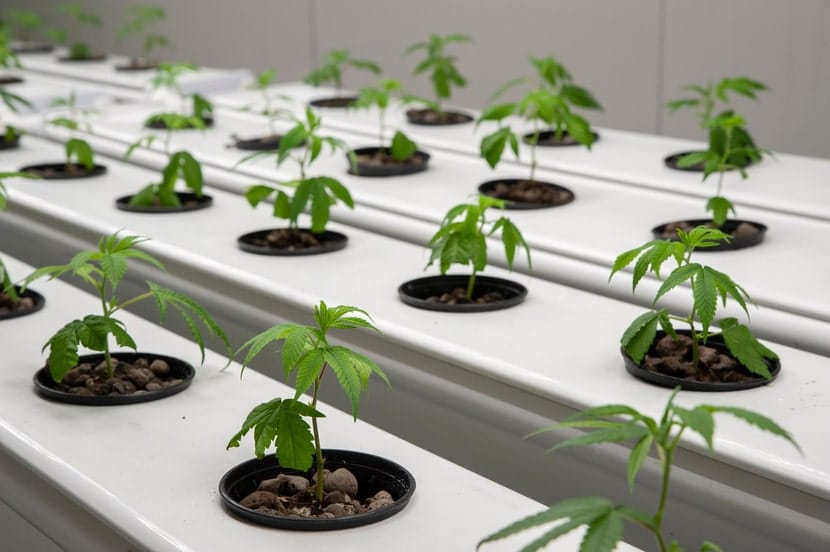
Cannabis is a Resilient and Versatile Crop
Cannabis is adaptable, but unlike other adaptable crops, it’s also biologically scrappy. This plant has evolved to thrive in a staggering range of climates, from Himalayan highlands to tropical jungles and arid deserts. Across centuries, humans have cultivated it for fiber, food, oil, medicine, and cultural rituals. But today, scientists are turning to it for a different reason: its ability to withstand environmental stress.
In recent experiments like the Martian Grow project, researchers sent cannabis seeds into orbit to see how they would respond to high-radiation polar orbits. Radiation, especially in space, can trigger genetic mutations that impact a plant’s growth, chemical profile, and resilience. By observing how cannabis reacts at the genetic level, researchers hope to identify mutations that could improve future generations, whether they’re grown on Earth, the Moon, or Mars.
Compared to traditional food crops like lettuce or wheat, cannabis offers something different. While leafy greens are essential for immediate sustenance, cannabis is being studied for its long-term utility. It’s fast-growing, low-maintenance, and high-yielding. All of which are traits that make it ideal for experimental growth cycles in space.
But it also has regenerative potential: it produces a wide array of secondary metabolites, including cannabinoids and terpenes, which are closely linked to the plant’s stress response and could provide valuable insight into how plants survive in microgravity and radiation-heavy environments.
And while more research is needed, cannabis has shown signs of phytoremediation—a process where plants help detoxify soil by absorbing heavy metals and pollutants. In a closed-loop system like a space station or future Martian base, crops that can contribute to soil health while producing usable biomass could become essential for long-term sustainability.
In short, we’re not sending cannabis seeds into space just to see if they sprout. We’re sending them because this plant has proven, time and again, that it can take a hit and come back stronger.
Its Genetics Offer Rare Insight Into Environmental Stress
One of the biggest reasons cannabis keeps ending up in orbit has nothing to do with what it grows into and everything to do with how it responds while getting there.
Cannabis produces a diverse range of chemical compounds. Most famously, cannabinoids like THC and CBD, but also terpenes (which give the plant its aroma) and flavonoids (which affect pigmentation and potential antioxidant properties). What makes cannabis so scientifically interesting is that the production of these compounds is highly responsive to environmental stress.
On Earth, we already see this in action. Plants grown at higher altitudes tend to produce more resin and higher concentrations of certain cannabinoids, possibly as a defense against UV radiation and temperature swings. Even factors like light exposure, nutrient levels, humidity, and pest pressure can shift the balance of compounds a cannabis plant produces. These small environmental changes influence its gene expression—essentially, which parts of its genetic code get turned “on” or “off” in response to stress.
In space, those stressors are cranked up dramatically.
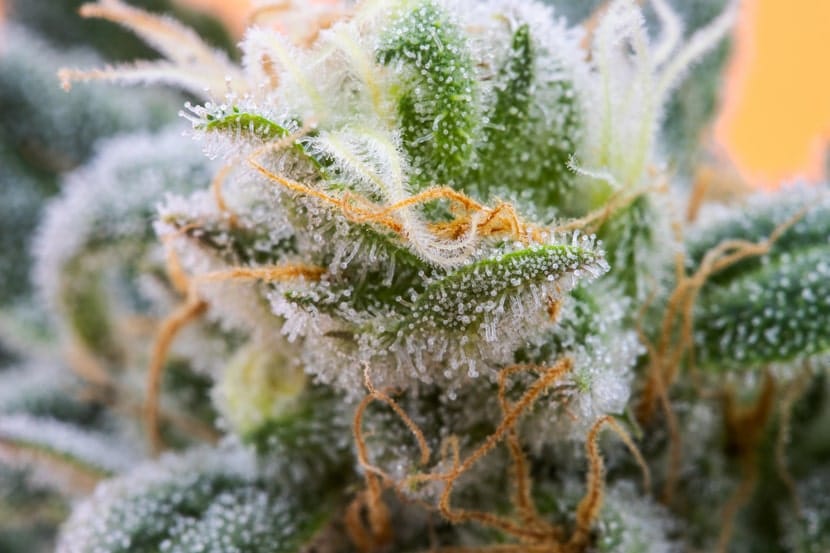
Microgravity (the near-weightless environment aboard spacecraft) alters everything from water distribution to cellular signaling. Radiation, especially in polar orbit or beyond low-Earth orbit, can damage DNA, disrupt gene regulation, or even introduce mutations in the genetic code itself. These combined conditions offer scientists a way to push the limits of plant biology and observe how genes and metabolic pathways respond under pressure.
Metabolic pathways are like internal highways for how a plant creates energy, grows, and produces chemical compounds. When radiation or gravity changes affect these systems, they can influence everything from how fast a plant grows to what kinds of chemical defences it prioritises. By studying these changes in cannabis where the chemistry is already complex and well-documented, scientists can better understand how plants “decide” which traits to express under stress.
This research doesn’t just apply to cannabis, though. It creates a blueprint for engineering stronger, more efficient crops across the board. The goal is to better understand how genes behave in extreme environments, and how that knowledge can be applied to boost food security back on Earth.
Imagine if potatoes could be bred to yield more starch with less water, or if animal feed crops like alfalfa could adapt to drought or salt-heavy soil. The same genetic insights we’re learning from cannabis in orbit may one day help us grow hardier crops in climate-stressed regions, recover farmland damaged by pollution, or someday build reliable food systems on another planet.
It’s a Test Case for Cryopreservation and Long-Term Crop Logistics
If we ever want to grow plants on the Moon, Mars, or in deep space, it’s not enough to test how they grow. We also need to figure out how to store, transport, and restart them after long periods of dormancy.
One major focus of space-based plant research is cryopreservation—the science of freezing biological material at ultra-low temperatures without damaging it. The ability to freeze, store, and later revive seeds or plant tissues is crucial for future missions, especially those lasting years or involving long-distance travel. And cannabis, with its high-value compounds and genetic complexity, offers a compelling test case for developing these preservation techniques.
None of the recent missions have sent whole cannabis plants. Instead, they send seeds and tissue cultures, which are small samples of undifferentiated plant cells grown in sterile containers. These are ideal for spaceflight: they take up minimal space, can be studied at the cellular level, and offer insight into how cryogenic freezing and microgravity affect plant development over time. Once returned to Earth, scientists attempt to regrow full plants from these samples, tracking how their growth, gene expression, and chemistry may have changed.
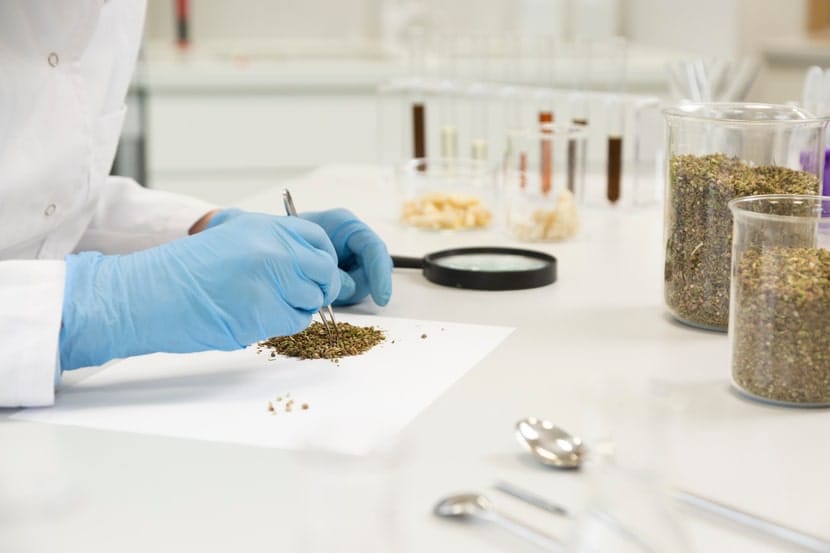
Learning how to reliably store and revive plant cells under space conditions helps researchers fine-tune cryopreservation for other critical crops, from staple grains like rice and wheat to medicinal plants and climate-resilient vegetables. It also supports the long-term viability of seed banks, which may be essential for restoring biodiversity in the event of ecological collapse or sustaining life in artificial habitats off Earth.
And it’s not just about storage. Closed-loop farming systems like those used in spacecraft and simulated Mars bases require crops that can grow quickly, produce useful biomass, and be rotated efficiently without depleting resources. Cannabis fits this profile. It produces fiber, oil, and plant waste that can be repurposed, and it’s been shown to grow in low-nutrient or contaminated soils, making it an asset in regenerative agriculture models.
By studying how cannabis handles freezing, radiation, and regeneration, researchers are gaining insight into how we might build reliable, scalable food systems in space and how to protect the crops we’ll rely on when we get there.
What Weed In Space Is Teaching Us (So Far)
The truth is, we’re still in the early days. Cannabis has only made a handful of trips to space, and much of the data (especially from more recent missions) is still being processed. But even now, a few early lessons are beginning to take shape.
For one, cannabis is proving to be a highly sensitive test subject for space biology. Even in short orbital flights, scientists have seen shifts in growth behavior, structural resilience, and chemical production at the cellular level. While these changes need to be confirmed through long-term, multi-generational studies, they point to something researchers have suspected all along: space changes plants.
What’s especially compelling is how these stressors (radiation, microgravity, temperature swings) seem to act as accelerators. They push genetic boundaries, potentially speeding up mutations or exposing dormant traits. For a plant like cannabis, whose chemistry is already complex and highly reactive to its environment, that opens the door to discovering entirely new cannabinoid or terpene profiles. Maybe even compounds we’ve never seen before.
And while cannabis gets the spotlight here, the implications are much bigger. If we can understand how to manipulate plant genetics safely in space, we might be able to use those tools to breed crops that grow faster, use less water, tolerate salt or heat, or thrive in closed-loop systems on Mars, yes, but also in places on Earth where farming is getting harder by the year.
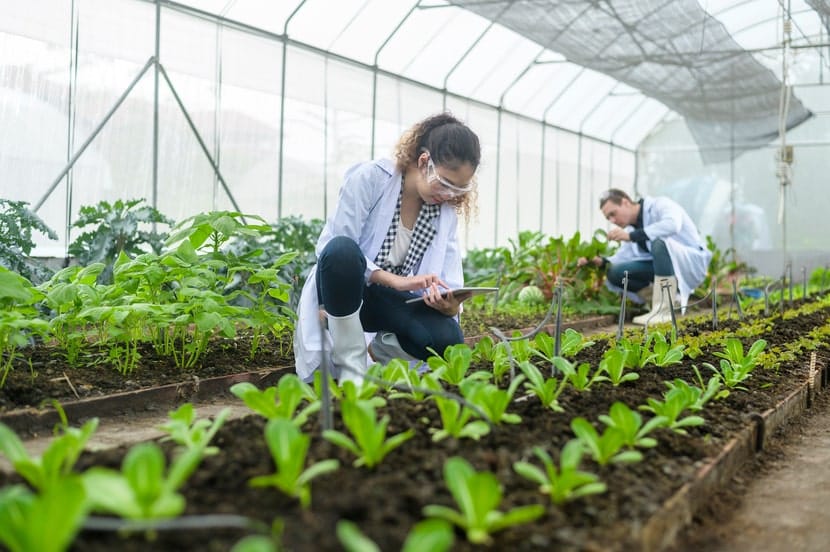
We’re also starting to understand more about how to store life. Cryopreserved cannabis cultures have become a proving ground for long-term biological storage: How do you freeze plant material without damaging it? How long can it survive without light, warmth, or gravity? Can you bring it back and still expect it to grow, thrive, and produce the same results?
All of this contributes to a larger vision: not just how to grow weed in space, but how to build agriculture systems that work in extreme conditions, whether they’re aboard a spacecraft, tucked inside a Martian greenhouse, or growing in soil damaged by climate change.
The work is still ongoing. Some payloads, like the recent MayaSat-1 capsule, didn’t survive re-entry. Others are just beginning multi-year study phases to examine generational changes in cannabis grown after orbital exposure. But one thing is clear: cannabis is already teaching us how plants adapt, mutate, and survive when the rules of Earth no longer apply.
Why Cannabis Over Other Edible Crops?
Unlike leafy greens or grains, cannabis isn’t being sent to space to feed astronauts or even to grow full plants. It’s being used as a research tool, not a survival crop. While space farming programs prioritise nutrient-dense produce like tomatoes, peppers, or kale, cannabis is part of a parallel effort: to understand how chemically complex and stress-sensitive plants behave in extreme conditions. More or less, it offers a completely different kind of value.
Cannabis is incredibly versatile. The seeds are protein-rich. The stalks can be processed into fiber, plastics, and construction materials. And the plant produces hundreds of biologically active compounds that visibly respond to changes in temperature, light, gravity, and radiation. That last trait makes it especially useful for studying how spaceflight impacts gene expression, mutation rates, and metabolic stress. All of which can inform how we grow other crops in future space missions or climate-challenged regions on Earth.
And while you can’t live off cannabis alone, that’s not the point.
Future missions won’t be built around a single crop. They’ll require closed-loop ecosystems, where multiple plants support different aspects of survival: nutrition, water recycling, medical support, psychological health, and raw materials. In that context, cannabis might not be the first thing you pack, but it could still be one of the most valuable things on board.
That’s not to say that scientists aren’t studying other edible crops, though. Cannabis is simply being researched to make future food security at home or among the stars more accessible.
Across missions aboard the ISS and beyond, scientists are testing all kinds of organisms: lettuces, mustard greens, wheat, algae, fungi, and even flowering plants like zinnias. NASA’s Veggie and Advanced Plant Habitat programs are exploring how microgravity affects everything from nutrient absorption to immune response. Spacefaring plants face unique biological stress, and the goal is to find out which species not only survive, but also adapt. Ideally, in ways that benefit human health, morale, and mission sustainability.
In this wider context, cannabis isn’t a replacement for food crops. But it’s becoming a reliable indicator species.
Key Missions and Organisations: A Timeline of Weed in Space
Cannabis research in orbit isn’t just a meme-worthy headline. It’s a growing field backed by biotech firms, research institutions, and aerospace companies around the world. From unofficial launches to international collaborations, here’s how cannabis got to space, and who helped it get there.
1970s–1990s: Space Plant Biology Grows—But Not Cannabis
During the Cold War, the U.S. and Soviet space programs ran experiments on how crops like wheat, soybeans, and potatoes grew in microgravity in attempts to learn how to sustain long-term human presence in space.
Cannabis, however, remained absent. It was shut out by prohibition laws and political stigma. The scientific potential was there, but the legal and cultural climate wasn’t ready.
Early 2000s: Mutation Breeding Takes Off
By the 2000s, radiation-induced mutagenesis had become a well-established method for enhancing crop traits. Seeds exposed to gamma rays or cosmic radiation sometimes developed useful mutations, from higher yields to climate resistance. Though cannabis wasn’t yet included, this groundwork would later support its entry into space research.
2011: First Gravity Stress Tests with Cannabis Seeds
A Russian research group unofficially attempted to germinate cannabis seeds under centrifugal hypergravity, which essentially simulates conditions beyond Earth’s gravity. Though not peer-reviewed, the experiment suggested cannabis could still germinate under intense physical stress.
2013–2017: Weather Balloons, Viral Headlines, and “Space Weed” Stunts
Before cannabis was accepted into serious research, it made its way toward space via viral marketing and DIY spectacle:
2013: The SeedHub Balloon Launch (U.S.)
One of the earliest known cannabis balloon launches came from a low-budget U.S. group affiliated with SeedHub, a cannabis seed directory. In a YouTube video posted that year, they claimed to have sent cannabis seeds, a small plant, and a joint nearly 29 kilometers above Earth using a high-altitude weather balloon. The payload reached what’s often called “near space” before the balloon burst and descended back to Earth. Despite minimal media coverage, it set the tone for the gimmicks to come.
April 2017: The Floating Joint
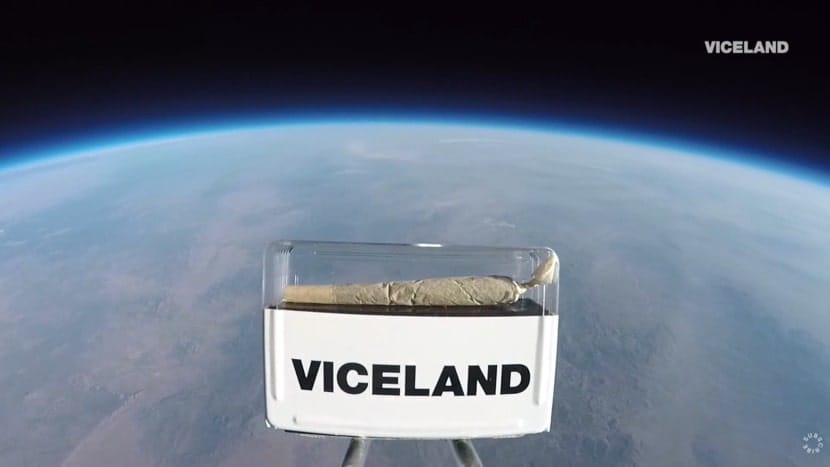
To promote Weed Week, UK-based Sent Into Space collaborated with Viceland TV to launch a single joint over 30 km into the stratosphere. Footage of the joint floating against the blackness of near space aired as part of the channel’s cannabis-themed programming. It wasn’t consumed, but the point wasn’t to smoke, anyway. It was to signal cannabis’s ascent into mainstream media.
October 2017: “Space Weed Bro” Launch with Herban Planet
The most infamous of the stratospheric stunts came later that year when Arizona-based Herban Planet partnered with Sent Into Space again—this time to launch their own cannabis brand: Space Weed Bro. Nearly half a kilo of cannabis buds were sent roughly 35 km up from a launch site in Arizona.
The event was a full-blown branding exercise. The “space weed” was recovered, packaged, and sold in local dispensaries as an “ultra-premium product that had reached for the stars.”
The mission was absurd, viral, and extremely of its time, but it worked. It generated national press and helped push cannabis deeper into the cultural mainstream.
2016–2019: Cannabis Cultures Reach the International Space Station
In the mid-2010s, cannabis research finally gained serious scientific footing in the space sector. This shift was led by a collaboration between Front Range Biosciences (a Colorado-based agricultural biotech company), SpaceCells USA Inc., and BioServe Space Technologies, a research partner affiliated with the University of Colorado Boulder. Their mission: to understand how microgravity affects plant cell growth, gene expression, and metabolic function, starting with two culturally and economically important crops: coffee and hemp.
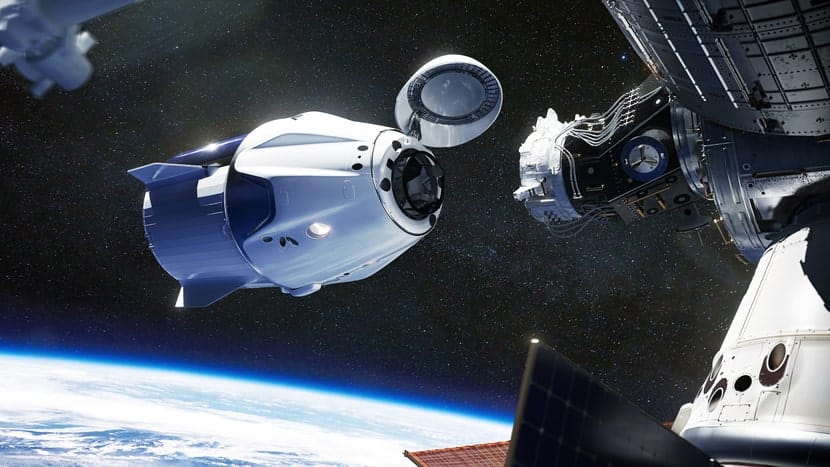
In 2016, these companies began laying the groundwork. Rather than sending full plants, they proposed launching tissue cultures—small, sterile clusters of plant cells that can grow into full plants under the right conditions. These are ideal for controlled studies, especially in confined environments like space stations. The focus was on observing how cells behave, adapt, and possibly mutate in microgravity, and whether those changes could reveal new agricultural traits or unlock novel bioactive compounds.
That plan became reality in December 2019, when SpaceX’s CRS-20 cargo mission launched aboard a Dragon capsule, delivering 480 plant tissue cultures to the International Space Station. Of those, a portion were hemp cultures, marking the first officially sanctioned cannabis experiment conducted in orbit.
The goal of the mission was to track how microgravity and radiation exposure influence cell development, gene regulation, and metabolic activity in space. While the results of this experiment have not yet been published publicly, the mission itself was a milestone: it formally introduced cannabis into the field of space biology, not as a gimmick or PR stunt, but as a research organism worthy of scientific study.
This breakthrough opened the door for future experiments and helped legitimise cannabis as a complex, chemically dynamic crop with potential applications far beyond Earth.
2020–2023: A Global Shift in Perspective
Research on plant biology in space began accelerating, with more data showing that microgravity and cosmic radiation can trigger gene expression changes and induce useful mutations in seeds. Although most studies focused on staple crops, the implications for cannabis were clear, and interest continued to grow.
2024: Laws Loosen, Access Expands
As cannabis laws relaxed across parts of Europe and North America, space agencies and private research firms became more open to cannabis-focused projects. Licensing reforms allowed scientists to explore cannabis in non-Earth environments for the first time, legally and with institutional support.
2025: MayaSat-1 Becomes the First Dedicated Cannabis Space Mission
On June 23, 2025, the Martian Grow Project (a collaboration between Slovenian researchers and private aerospace firms) launched approximately 150 cannabis seeds into low-Earth orbit aboard MayaSat-1, a nanosatellite powered by the Nyx reentry capsule from The Exploration Company.
The mission marked a scientific first: the first cannabis-focused spaceflight dedicated entirely to studying the long-term effects of extraterrestrial exposure on plant genetics. The seeds orbited Earth for nearly three hours at altitudes exceeding 300 km.
But the mission didn’t end as planned.
During reentry, the capsule experienced a parachute failure, crashing into the Pacific Ocean near French Polynesia. The impact destroyed the seed payload and, unexpectedly, drew global headlines—not for the cannabis experiment, but because ashes from deceased individuals sent aboard by Celestis Memorial Spaceflights were also on board. The incident fueled confusion online, but it’s worth clarifying: Celestis has been launching memorial flights for over three decades, and their involvement in this mission was unrelated to the cannabis research. The ashes were simply sharing the ride.
Despite the crash, MayaSat-1 represented a major leap in cannabis science. The project had planned multiple follow-up phases: retrieving the seeds, propagating mutations, running stress tests, and simulating Martian soil and gravity environments here on Earth. While those steps are now delayed, the mission validated the growing interest in cannabis as a bioengineering tool and set a precedent for future orbital studies.
What’s Next?
While current missions are mostly U.S.-driven, other countries may soon join the race:
- Canada: With a well-established legal cannabis framework and a strong biotech sector, Canadian researchers have expressed interest in plant biology studies aboard space platforms.
- Israel: A global leader in cannabis medical research, Israel has the scientific infrastructure and policy flexibility to pioneer future orbital studies.
- European Union: As EU regulations slowly modernise, agencies like the European Space Agency (ESA) could begin supporting cannabis-adjacent research, especially for industrial hemp applications.
Global cannabis R&D is expanding rapidly. As legalisation spreads and stigma fades, we’re likely to see broader participation in space-based studies, whether through national space programs, biotech firms, or international academic partnerships.
From germination tests to genetic evolution, cannabis has become more than a curiosity. It’s a bioindicator, a test subject, and a potential tool in building sustainable life beyond Earth.
With advancements in CRISPR, synthetic biology, and astro-agriculture, space-based cannabis studies are poised to grow. Private companies and academic institutions are already exploring follow-up missions to investigate how cannabis could serve multiple roles: medicine, fiber, food supplement, and environmental regulator.
What Weed in Space Could Mean for the Future
As cannabis research moves beyond the Earth’s atmosphere, it’s quietly becoming part of a much larger conversation—one that isn’t about novelty, but about survival.
In future off-Earth environments, every resource must serve multiple purposes. Someday, cannabis could play a valuable role in regenerative life support systems. Its ability to produce food, fiber, and oxygen makes it a potential building block for self-sustaining habitats. Seeds could serve as a protein-rich source of nutrition. Stalks could be used for textiles and building materials. The plant’s natural ability to sequester carbon and support soil health gives it a compelling case as a closed-loop crop for long-term missions.
But the real breakthroughs may come from what cannabis can teach us about resilience here on Earth.
Space is an ideal proving ground for genetic stress tests. Microgravity, radiation, and temperature swings simulate the same extremes that Earth’s agriculture is increasingly facing. By studying how cannabis reacts to these conditions, scientists can begin identifying mutations or genetic traits that enhance stress tolerance. Those discoveries could help inform breeding strategies for other climate-vulnerable crops on Earth.
This kind of research also plays a role in preserving genetic diversity. As ecosystems collapse and growing regions shift, seed banks are racing to store viable, diverse genetic material for the future. Cannabis, with its complex genome and growing global importance, is emerging as a candidate for long-term preservation and analysis. The tools developed to study its adaptation in space (such as mutation tracking, closed-loop nutrient systems, and stress response sensors) may soon be applied to other medicinal and culturally significant plants.
There’s also a broader biotech angle. Cannabis is helping to refine agricultural systems that work in low-resource environments. The experiments happening now could inform innovations in vertical farming, urban agriculture, and closed-loop ecosystems used on Earth. Crops like mushrooms, ginger, or ginseng, which are valuable, delicate, and often difficult to grow, may one day benefit from the infrastructure and insights originally developed to study weed in orbit.
In that way, cannabis isn’t just a plant hitching a ride to space. It’s becoming a lens through which we explore how to grow smarter, survive better, and prepare for whatever comes next. Whether the goal is sustainable life on Mars or resilient farming on a warming Earth, the experiments taking place today could shape how we feed, heal, and build in the future.
Final Thoughts: So, Why Does Weed Keep Ending Up in Space?
Cannabis has always been a symbol of rebellion, healing, and possibility. And now, it’s becoming a symbol of resilience. Of what happens when a once-stigmatised plant is taken seriously for its agricultural versatility, its biological complexity, and its potential to teach us something about survival in a changing world.
Weed keeps ending up in space because it straddles two frontiers: one social, one scientific. Legalisation has opened new doors. Biotechnology has created new tools. And suddenly, a plant once relegated to the shadows is riding on SpaceX payloads and nanosatellites—not as a gimmick, but as a genuine research subject.
That shift tells us something. Not just about cannabis, but about culture. About how quickly the boundaries of possibility move once we’re willing to question old assumptions. So maybe it’s not that surprising that weed keeps ending up in space. After all, it’s been defying gravity for decades.






Leave a Comment